πŸ‡―πŸ‡΅ Japan 225 CFD β€” Setup Explained (Beginner Friendly)

πŸ“Œ What Are We Looking At?

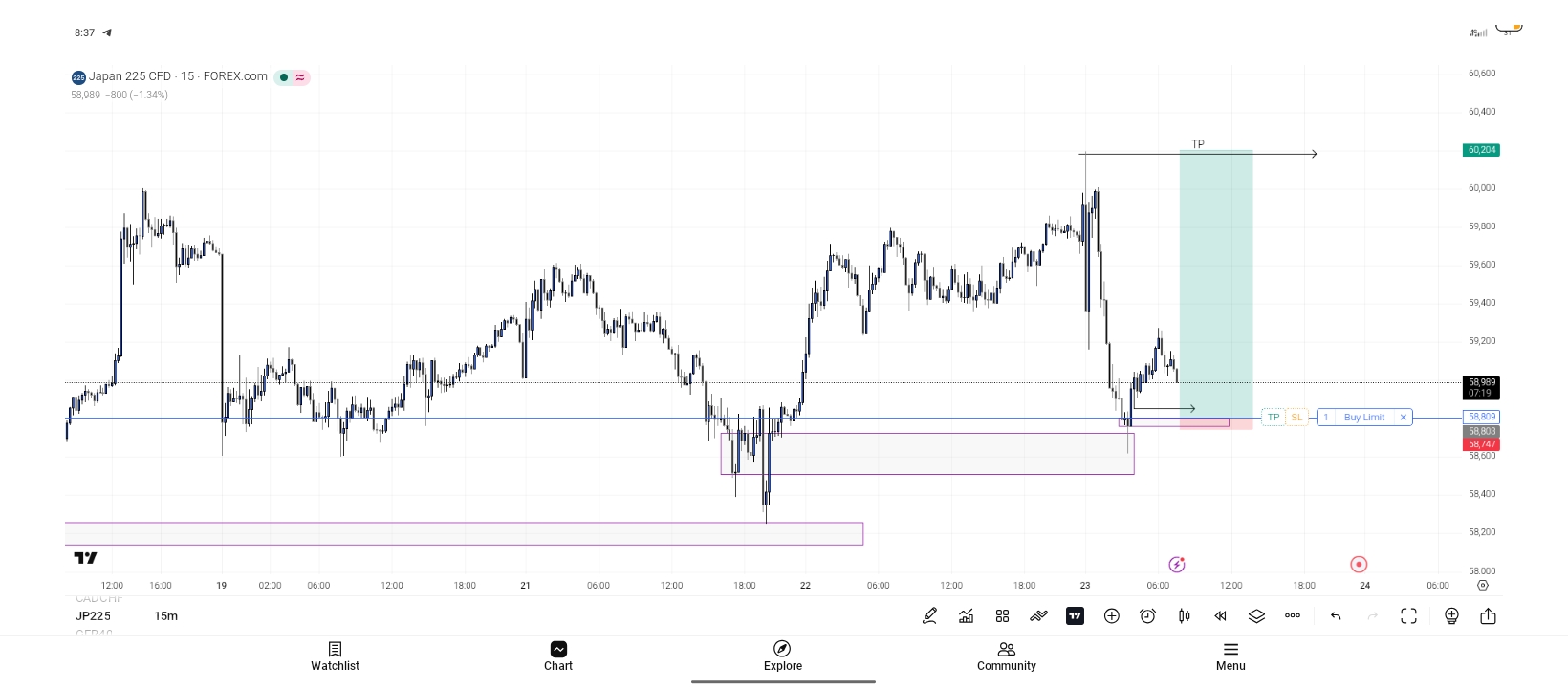
We're analyzing the Japan 225 (Nikkei) on a 15-minute chart. The goal is to find a high quality **buy opportunity** β€” and here's the step-by-step guide of why this trade makes sense.

🧱 Step 1: The 4-Hour Order Block (The Big Foundation)

Think of the market like a building. The 4-hour order block is the foundation.

An order block is simply a area on the chart where big institutions (banks, hedge funds) placed large buy or sell orders. When price comes back to that area, it tends to react strongly.

βœ… In this case, price came down and reacted bullishly off that 4-hour order block meaning the big players stepped in to buy. This is our first signal that buyers are in control at a higher level.

G
@godswillfx - 3 hours ago

πŸ”„ Step 2: Market Structure Shift on the 45-Minute (Confirmation)

After that reaction from the 4-hour block, the 45-minute timeframe gave us a Market Structure Shift (MSS).

What is a Market Structure Shift?

> Normally, a downtrend makes lower lows and lower highs. A Market Structure Shift happens when price suddenly breaks above a previous high telling us the trend may be changing from bearish to bullish.

βœ… This was our second confirmation the medium-term trend is shifting upward.

G
@godswillfx - 3 hours ago

⚑ Step 3: The 45-Minute Breaker Block Gets Triggered

Now here's where it gets interesting. After the structure shifted, price came back down and hit a Breaker Block on the 45-minute.

What is a Breaker Block?

> A breaker block is a candle (or group of candles) that previously caused a swing high or low to break. When price returns to that zone, it often acts as a strong zone launching price in the opposite direction.

βœ… Price tapping into this breaker block confirmed that buyers were defending that level another green flag for a buy.

G
@godswillfx - 3 hours ago

Step 4: Market Structure Shift on the 15-Minute (Entry Timeframe)

After the 45-minute breaker block was hit, the 15-minute chart also showed a Market Structure Shift meaning even on the smaller timeframe, the trend flipped bullish.

βœ… This tells us the momentum has shifted on multiple timeframes ( 4H, 45M, and now 15M are all aligned bullish).

G
@godswillfx - 3 hours ago

Step 5: Waiting for the Retracement (The Actual Entry)

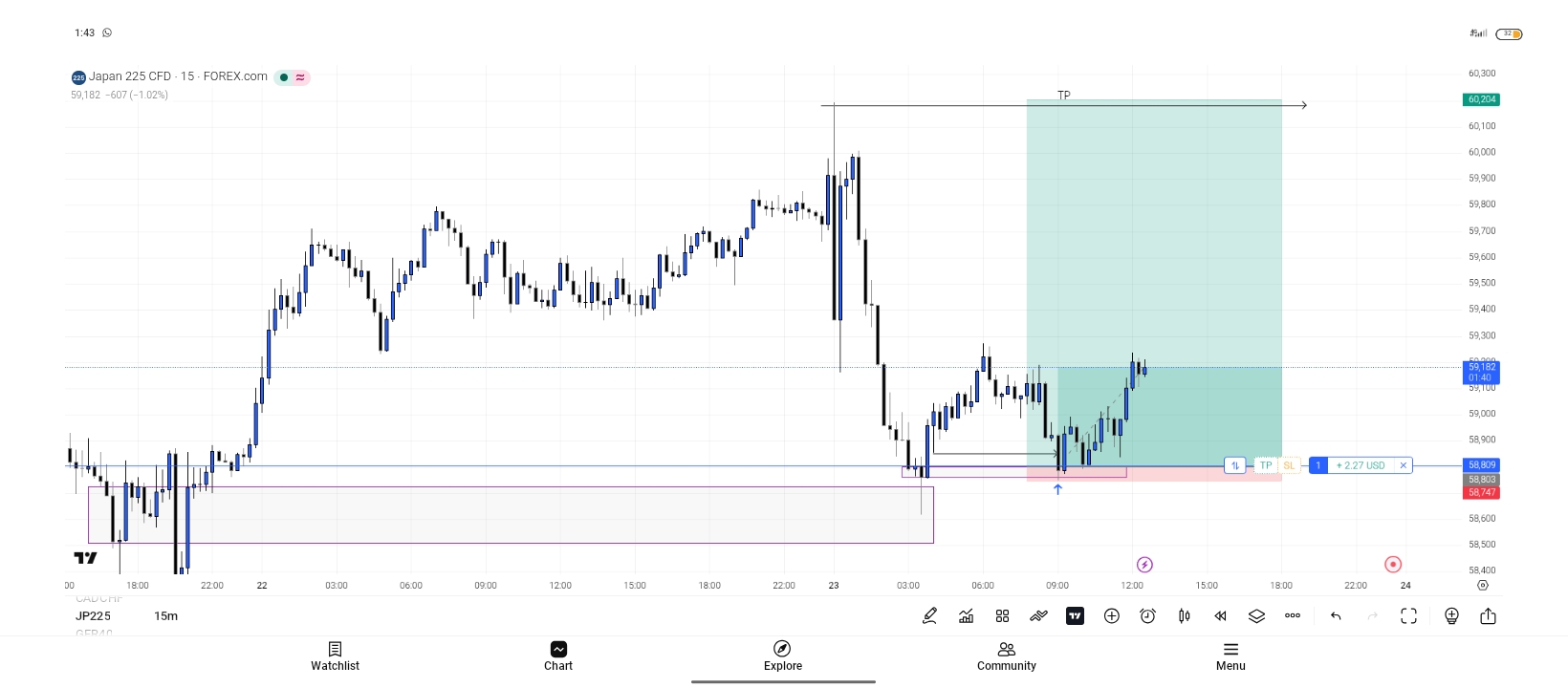
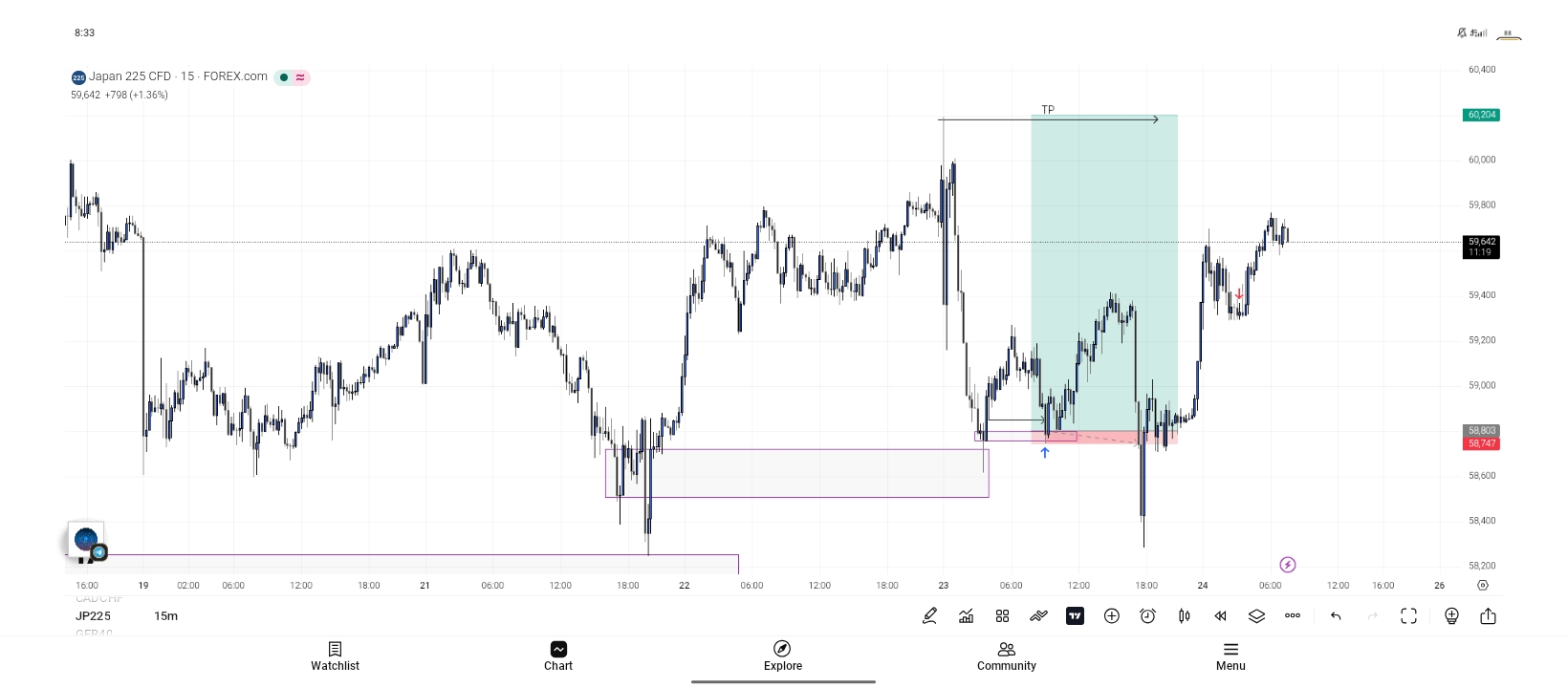
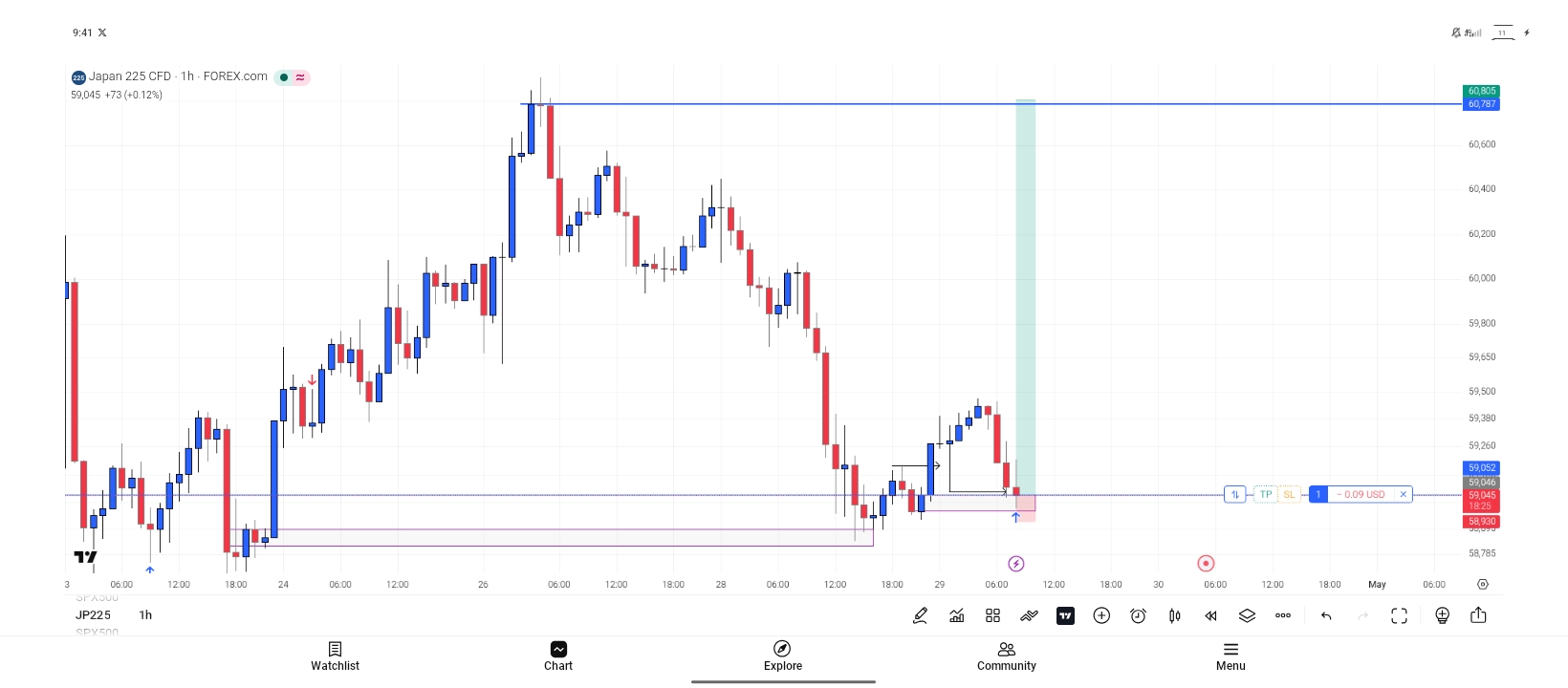
Right now, we are not just jumping in randomly. The plan is to wait for price to pull back down to the 15-minute Breaker Block (the pink/highlighted zone you see on the chart).

Why wait for the retracement?

> Entering at the breaker block gives us a better price, a tighter stop loss, and a much bigger reward. This is how professional traders get in, they let price come to them, not chase it.

βœ… Once price taps that 15-minute breaker block zone, that is the buy entry.

---

G
@godswillfx - 2 hours ago
Quoted - dipuo_kefilwe

Please when does this nikkei 225 market open each day?

πŸ‡―πŸ‡΅ Nikkei 225 Market Hours

The Tokyo Stock Exchange runs two sessions daily (Monday–Friday):

- Morning: 9:00 AM – 11:30 AM (Tokyo Time)

- Afternoon: 12:30 PM – 3:30 PM (Tokyo Time)

G
@godswillfx - 2 hours ago
Quoted - dipuo_kefilwe

Please when does this nikkei 225 market open each day?

However, since I'm trading the Japan 225 CFD on FOREX.com, the broker likely offers extended hours almost 24/5. Always check your broker's platform for the exact open and close times.

The best time to trade is at the Tokyo open (9:00 AM JST) when volume and volatility are highest. 🎯