P
Victory Lot
@pisces03
Last seen:
1 hour ago
The lord God is my strength
1 Followers
0 Following
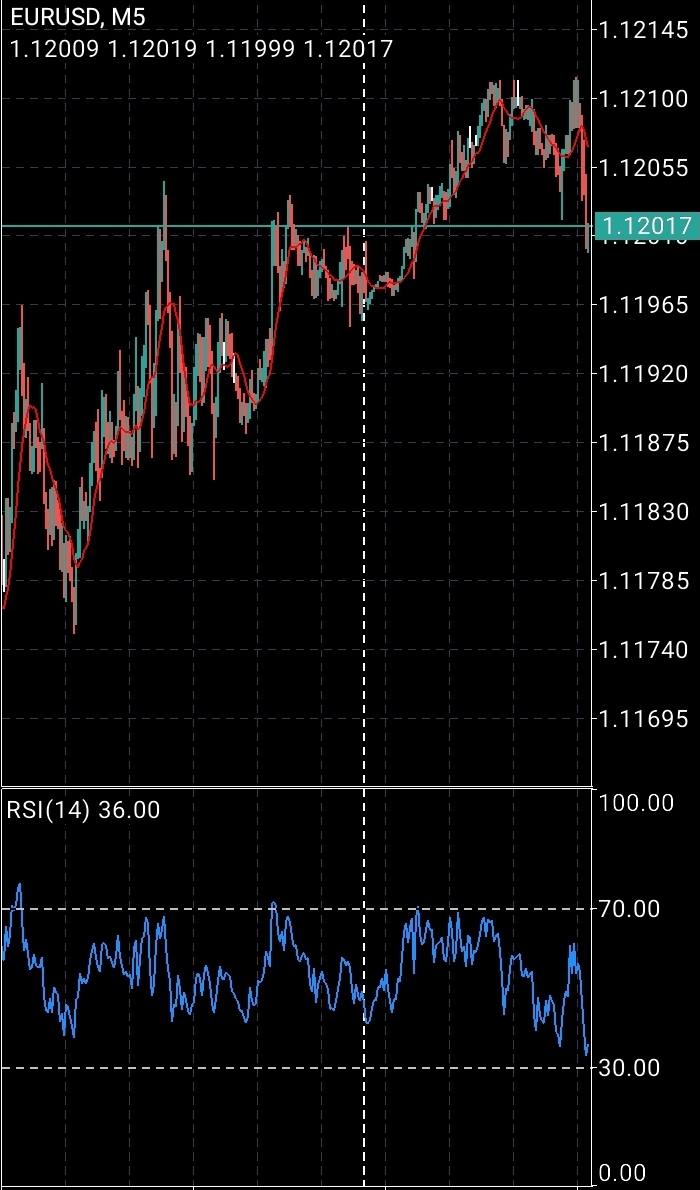
High probability: Clear trend + strong support/resistance + good entry confirmation + good risk-to-reward.
Low probability: No clear trend + weak/unclear levels + little confirmation + poor risk-to-reward.
Simple rule: The more confirmations a setup has, the stronger it is.
Does this help?
Noww
My own questions
Let's talk about:Trading Sessions & News
1.What are the London, New York, Tokyo, and Sydney sessions?
2. What is market volatility?
3. How does news affect Forex?
4. How do interest rates affect currencies?
5. What happens when the US Federal Reserve raises or cuts interest rates?
10. Purpose of Stop Loss and Take Profit
Stop Loss (SL)
A stop loss is used to automatically close your trade when price reaches a level you've set to limit your potential loss.
qa-web.forex.com
Example:
You BUY EUR/USD at 1.1000.
You don't want to lose more than a certain amount, so you place your SL at 1.0950.
If price falls to that level, the order is triggered and the trade is closed.
Stop Loss = "Get me out if I'm wrong."
Take Profit (TP)
A take profit automatically closes your trade when price reaches your chosen profit target.
qa-web.forex.com
Example:
You BUY EUR/USD at 1.1000.
Your target is 1.1100.
You set your TP at 1.1100.
If price reaches it, your trade automatically closes and locks in the intended profit.
Take Profit = "Get me out when I've reached my target."
9. What is consolidation?
Consolidation is when the market is moving sideways instead of strongly going up or down.
For example:
1.1000 β 1.1050 β 1.1000 β 1.1040 β 1.1010
Price keeps moving within a relatively limited range.
It often shows that the market is indecisiveβbuyers and sellers are struggling for control.
qa-web.forex.com
So:
Bullish β π generally going up
Bearish β π generally going down
Consolidation β βοΈ moving sideways
8. What is a bullish market?
A bullish market is a market where prices are generally rising or buyers have more control.
Example:
EUR/USD:
1.1000 β 1.1050 β 1.1100 β 1.1150
That's bullish.
An uptrend is commonly characterized by higher highs and higher lows.
Bullish = buyers/upward movement.
7. What is a bearish market?
A bearish market is a market where prices are generally falling or sellers have more control.
Example:
EUR/USD:
1.1200 β 1.1150 β 1.1100 β 1.1050
That's a bearish/downward movement.
A simple way to recognize a downtrend is through lower highs and lower lows.
Bearish = sellers/downward movement.
6. Pending order vs market order
Market order:
You want to enter the trade now, at the best available current price.
Example:
EUR/USD is currently 1.1000.
You click BUY β you're asking to enter immediately.
Pending order:
You tell the broker:
"Don't enter me now. Enter me when price reaches my chosen level."
For example, EUR/USD is 1.1000, but you want to buy at 1.1050. You can place a pending order that activates when price reaches that level.
Pending orders can include limit and stop orders.
qa-web.forex.com
Easy difference:
Market order = "Enter now."
Pending order = "Enter later when my condition is met."
5. What's the difference between margin and free margin?
These two are related, but they are not the same.
Margin = money in your account that is being reserved/used to keep an open trade running.
Free margin = money in your account that is still available to open new trades or absorb losses.
Example:
You have $100 in your account.
You open a trade that requires $20 margin.
Account equity = $100
Used margin = $20
Free margin β $80
So remember:
Margin = money being used/reserved.
Free margin = money still available.
Leverage affects how much margin you need: higher leverage generally means a smaller margin requirement for the same position size.
4. How does leverage amplify both potential profits and losses?
Leverage allows you to control a larger trade with a smaller amount of your own money.
For example, with 50:1 leverage, $1 can control $50 worth of a position.
Imagine you have $100 and use leverage to control a $5,000 position.
If the position makes $50 profit, that's a 50% return on your $100.
But if it loses $50, you've also lost 50% of your money.
So:
Leverage doesn't only make profits bigger; it makes losses bigger too.
That's why leverage is often described as a double-edged sword.
Showing 20 of 100+ replies.
Log in to see all replies