Risk To Reward
The amount of risk that you take in order to make an expected amount on a trade is known as the Risk/Reward and is expressed as a ratio. The ideal ratio is of hot debate. There are warring parities of traders (mostly retail traders) who say 1:1 is the best ratio,1:3 is better, or 1:2 is ideal. There are others who say that the ratio is completely meaningless and should be discarded altogether. Others say that a R/R is only for those who like to "set and forget" their trades of which consists only of the dumb, rookie trader crowd whom have minimal trading experience. There's a ton of differing opinions on the Risk/Reward ratio and the subsequent debates that follow can make a beginning trader confused and lead them in the wrong direction, which is dangerous for their long-term success.
Most people have day jobs unlike the 'professional' traders who sit at their computer all day scouring 32 currency pairs on 12 computer screens. Not everyone will have the same time allocation as other traders so as a reuslt everyone will use different trading strategies that bend to their daily routines. The static R/R is best used for traders who don’t have the time to watch their computer screen all day long analyzing price action every 15min.
A static R/R is also good for basic EA management schemes so as to backtest a certain strategy and produce qualifying metrics.
How much you risk on a trade depends on what edge you have or what you are aware of that you think other traders aren't aware of. When you think you have an edge you can increase your risk, at least that's what I do.
R/R ratio is also applied differently to different types of strategies. For some strategies a static R/R serves as a guideline for their risk management. For these types of strategies there should be a minimum R/R maintained for every trade taken with the potential to increase the ratio to let winners run and ride a trend. Other strategies find the R/R irrelevant to their trade setup process (even though behind the scenes they still maintain a positive expectancy ratio unwittingly).
Risk-to-Reward (R:R) is the relationship between what you are willing to lose on a trade and what you aim to gain.
👉 It answers:
“Is this trade worth taking based on potential profit vs possible loss?”
Risk-to-Reward (R:R) is the relationship between what you are willing to lose on a trade and what you aim to gain.
👉 It answers:
“Is this trade worth taking based on potential profit vs possible loss?”
Basic Example
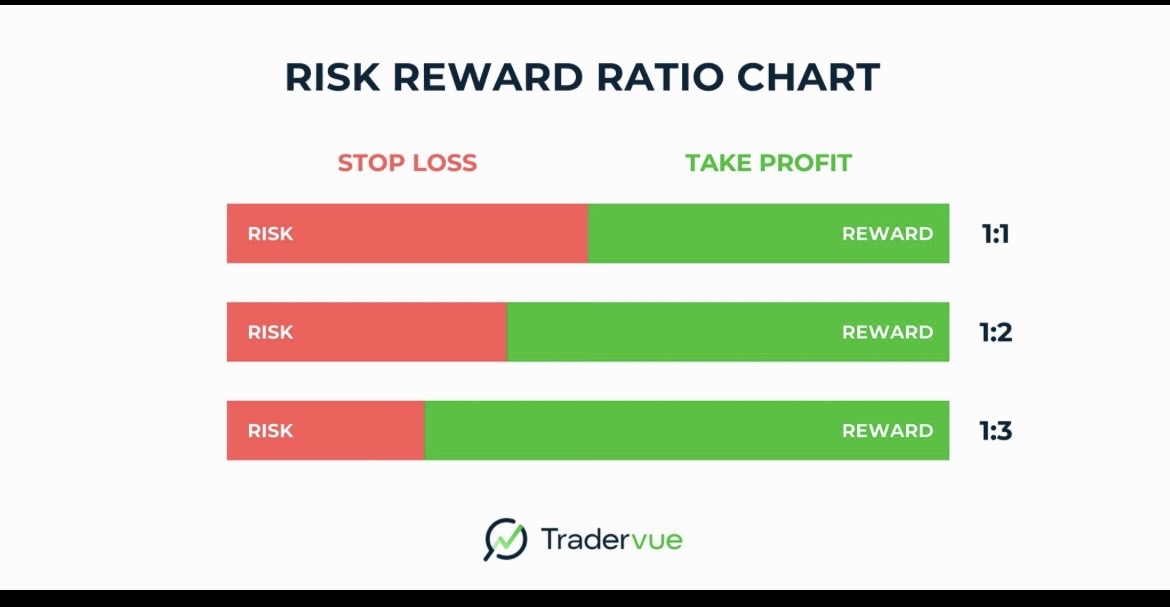
You risk $10 to make $20
Your R:R = 1:2
This means:
If you lose → -$10
If you win → +$20
Why It Matters?
You don’t need to win every trade to be profitable.
For example:
Risk = $10
Reward = $20 (1:2 ratio)
Even if you win only 50% of your trades, you still make money:
5 losses = -$50
5 wins = +$100
Net profit = +$50
👉 That’s the power of good R:R.
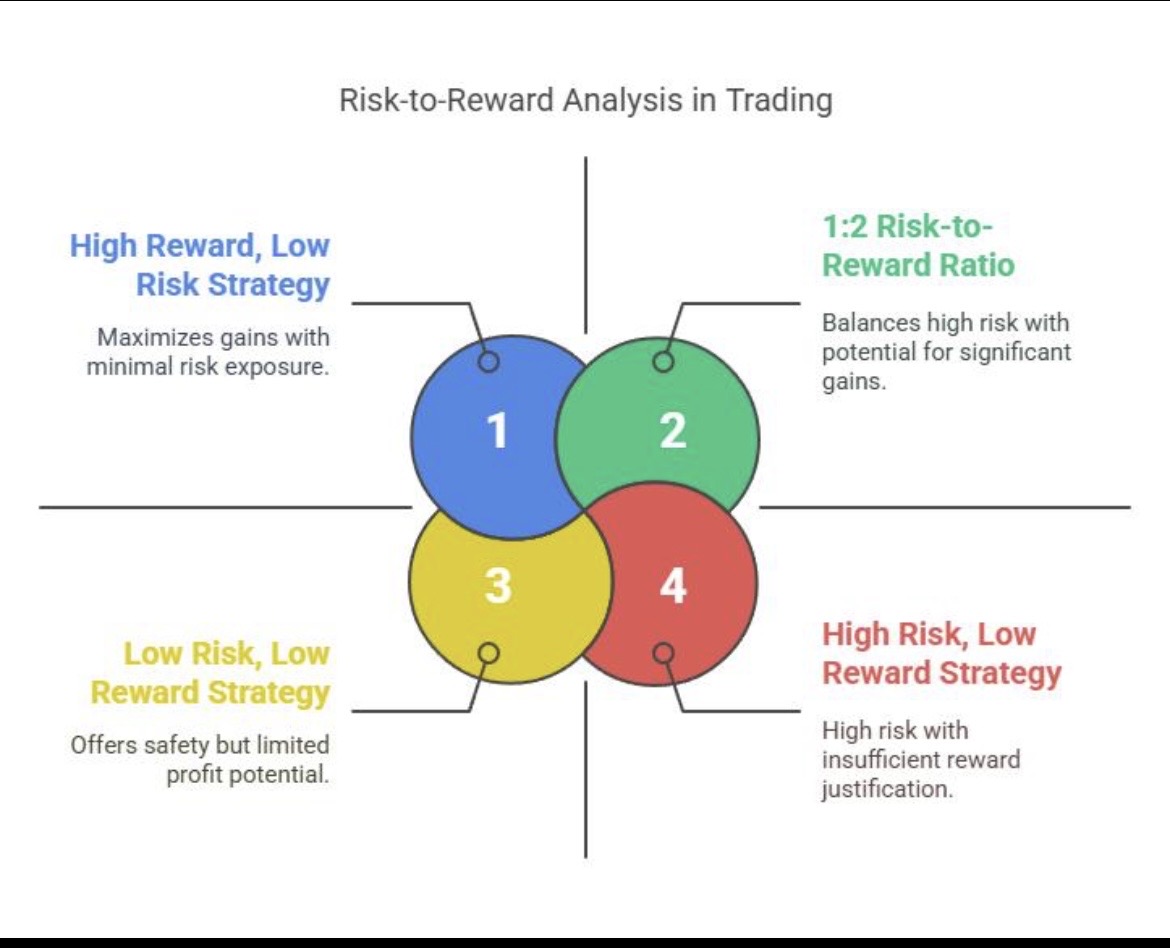
Common Ratios Traders Use
1:1 → Balanced (risk $10 to make $10)
1:2 → Popular and effective
1:3+ → Higher reward, but harder to hit
To me it is not really a bad thing if the risk is higher than the reward by a few pips. In some scenarios you might miss out on the start of a trend and when you come to trade you see the market has moved already. to enter such a trde you may have to place a higher SL than the potential reward
You are saying you can risk 10$ to make 5$ right?
I can risk $6 to make $5
Wow, I don’t think that’s a better way to trade. Long time, I don’t think you will be profitable that way.
How It’s Applied in a Trade
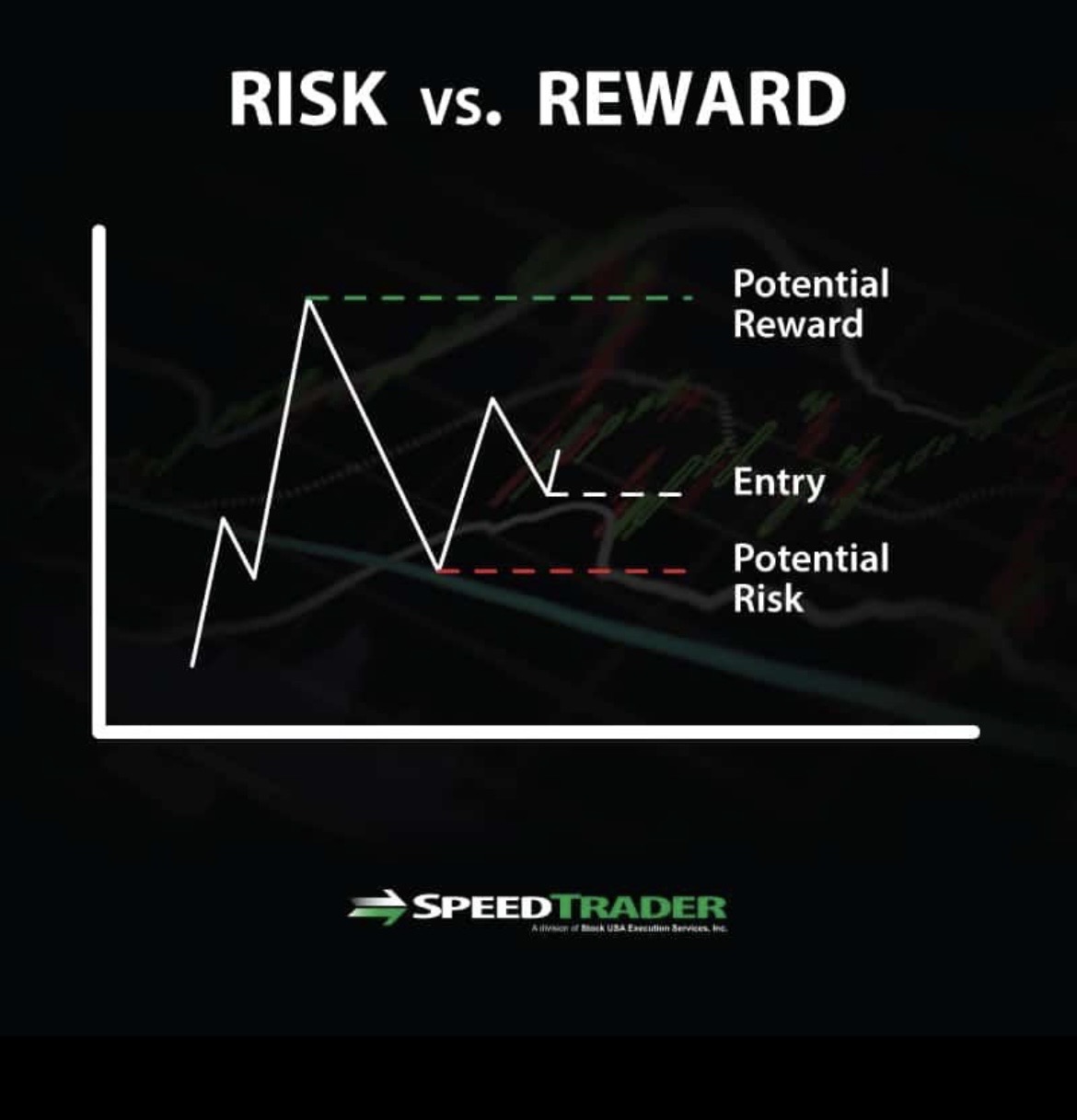
Stop Loss (SL) = your risk
Take Profit (TP) = your reward
Example:
Entry: 1.1000
Stop Loss: 1.0980 (20 pips risk)
Take Profit: 1.1040 (40 pips reward)
👉 R:R = 1:2
Trader Insight (Very Important)
A good R:R protects you from losing streaks
A bad R:R requires a very high win rate to survive
Consistency comes from combining:
Solid entries
Proper risk management
Favorable R:R
Bottom Line
Risk-to-reward is not just a concept—it’s your edge protector.
👉 You’re not trying to win every trade.
👉 You’re trying to make more when you win than you lose when you’re wrong.