
D
Dominykas Paneve
@dominykas
Last seen:
3 days ago
VIX Trader
0 Followers
1 Following
Losers average losers. They lose on BTC/USD and then run to try their LUCK on EUR/CAD. If that one doesn't work, they quickly run to GBP/CHF to try their luck again😂
Its an uphill task and you may end up turning your $100 to $0 eventually. Turning $100 to $1,000 could take you a long time except you want to use extremely high leverage which could backfire.
Why don't you set a realistic goal like turning $100 to $200?
It means the cheapest instrument you can trade with that broker will cost you 1.2 pips. Traditionally, the cheapest instrument is the EUR/USD currency pair.
I try to maintain a margin level of at least 400%, so for me if opening additional trades will not deplete my margin level I will do so.
there was a time I made 50+ pips longing nfp, but I lost it back to the market when i tried to short in the opposite direction 🤣
Futures are basically an agreement to buy something tomorrow, but at today's price. This "agreement" is traded on exchanges like the Chicago Mercantile Exchange (CME) etc. Futures are mostly cash settled so no physical exchange of the underlying commodity ever takes place.
Futures also have an expiry date, and you can sell the contract or enter into an offsetting one before its expiry.
Futures are high risk instruments because they are marked to market at the close of every business day and you are debited/credited for the change in price of the underlying.
To manage the risk of Futures contracts, investors buy options on the futures contract which is a way of hedging. The options give the investor the right but not the obligation to buy/sell off the futures contract if they see it is not going to end in the money.
If the investor chooses not to execute the options contract, he is free to walk away but he will lose the premium he paid to buy the options.
Investors only buy options when they are afraid their futures contract may not end in the money, so when we see many options being bought it means there is fear in the market.
The Volatility Index is based on measuring this fear, by measuring how many S&P500 options are being bought.
Although the free deposit bonus is Non withdrawable, it still adds to your margin level, keeping your trades open for longer when the market is moving against you.
However, companies that rely on local consumption of their products within the EU may see a drop in profitability if the Euro weakens because EU citizens will see most of their purchasing power eroded & may choose to go for cheaper alternatives to save cost.
Well, for companies that do a lot of exports such as Lamborghini, Ferrari, etc. their share prices are actually going to rise because most of their cars are bought in US Dollar from clients residing outside of Europe. If these companies get paid for their products in USD, they can convert this dollar back to euro and declare higher profit, pay dividends etc. which boosts their stock price.
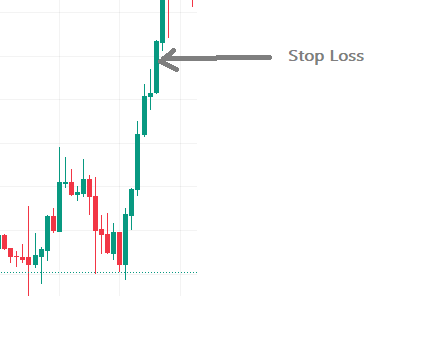
The low risk thing to do is to buy at the beginning of the up trend. But if i missed buying the low then yes i would still buy a rising market but i would place a tight stop loss below the current candle.
I can relate to what youre saying George! Its the cold truth!
Its easy to call yourself a trader but how much of the profit do you really keep gicing it back to the market? It is like running around in cirlces only to find yourself back at the begining.
When i started trading XAU/USD i was always making money then losing it back to the market until I said to myself "this has to stop". I began trading responsibly and only taking high quality trades with a high probability of success. I also started cutting my losses very early not giving them time to grow.
The solution is to manage risk properly and not lose too much money in one day, so you have enough gun powder to try again the next day.
Price action trading simply means trading without the help of technical indicators. It is the purest form of trading practiced back in the days when they were no fancy computers and programming languages. Price action trading is like driving a manual stick shift car as compared to driving an automatic gear shift car.
Price action traders depend on knowledge of market sessions, market psychology, news, macro economics etc. when placing their trades.
Let me give you an example, a round number like 1.3000, 1.4000, 1.5000 etc. is more likely to be where traders will place their stop loss because it is easy to remember.
A price action trader knows round numbers are psychological numbers and will avoid placing stop loss there because it is predictable.
Another example is the London session starts from 8 am till 5 pm but most of the action/momentum is during the first 1 hour (between 8 am to 9 am). Price action traders also know this and will use it to their advantage.
A last example: there are option orders every day (options are usually sold by market makers , hedge funds etc to manage their risk). These option orders have prices which tend to act as magnets in the morning before they expire.
If theres an option valued at $2bn at strike price 1.2000 expiring by 10am in the morning, it is likely price may gravitate towards that price and range around there till after 10 am.
So, price action traders depend on a lot of raw data to trade, but they are not really into technical indicators.
0.01 is the smallest lot size that your broker will probably allow you to trade. This means when entering lot size you can enter sizes such as: 0.01, 0.02,0.03, 0.04, 0.05 etc. in that sequence.
Remember that the smaller the lot size, the smaller your potential profit/loss. If you decide to trade larger lot sizes than 0.01, then you risk larger losses if the trade doesn't go as planned.
To resist the temptation to trade bigger lot sizes, you can open a micro account where you lot size is restricted to 0.01 only.
when brokers suspect that volatility is about to spike, they reduce leverage so as to prevent your trading account from going into negative should the market move against your position swiftly.
When leverage is reduced, the broker requires you deposit more margin in order to open a trade, thus shifting much of the risk from themselves to you.
Every broker I have traded with, has periods when they reduce the leverage, how ever some brokers do it more often than others.
Brokers who reduce leverage too frequently may not be as robust (financially/balncesheet wise) as those who dont do so frequently.
For example, today I tried to trade the EUR/USD at the start of the Pre-NewYork session (1 PM) but i couldnt open a position because the broker required more margin so I had to miss out on the trade which would have been profitable.
This is why I always trade with more than one broker, so that when one reduces leverage, I can quickly go to the other broker to open the trade.
VIX 75 means Volatility Index 75, and it is a synthetic Index that is designed to mimic the actual VIX fear index when it is at a reading of 75 points.
Let me break it down, there is something called the VIX index which measures how much fear is in the market. When investors are afraid, you see them buying options contracts on the S&P 500 index, and so the more options contracts are bought, the more the sense of fear in the market.
Now, a VIX reading of 20 and below is considered low fear, but a VIX reading higher than 20 is considered moderate to high fear.
Now the people who made the VIX 75 designed it to mimic a situation where the fear is very high in the market and the VIX reading is 75.
VIX 75 is a very volatile instrument to trade because when VIX reading is 75, prices rise and fall wildly and support & resistance levels may not hold the way you are used to seeing them do.
In such a case when trading VIX 75 you must practice higher risk management, set smart stop losses and know when to exit the market with your profits before the market turns against you.
You must also know when to cut your losses early, so you live to trade another day.
With high risk comes high reward, and although VIX 75 is a risky instrument to trade, people still trade it because of the desire to make high profits.