Crude Oil Trading Strategies and Daily Market Breakdown
A
@asuquokelvin - 1 month ago
Quoted - nsg_usd

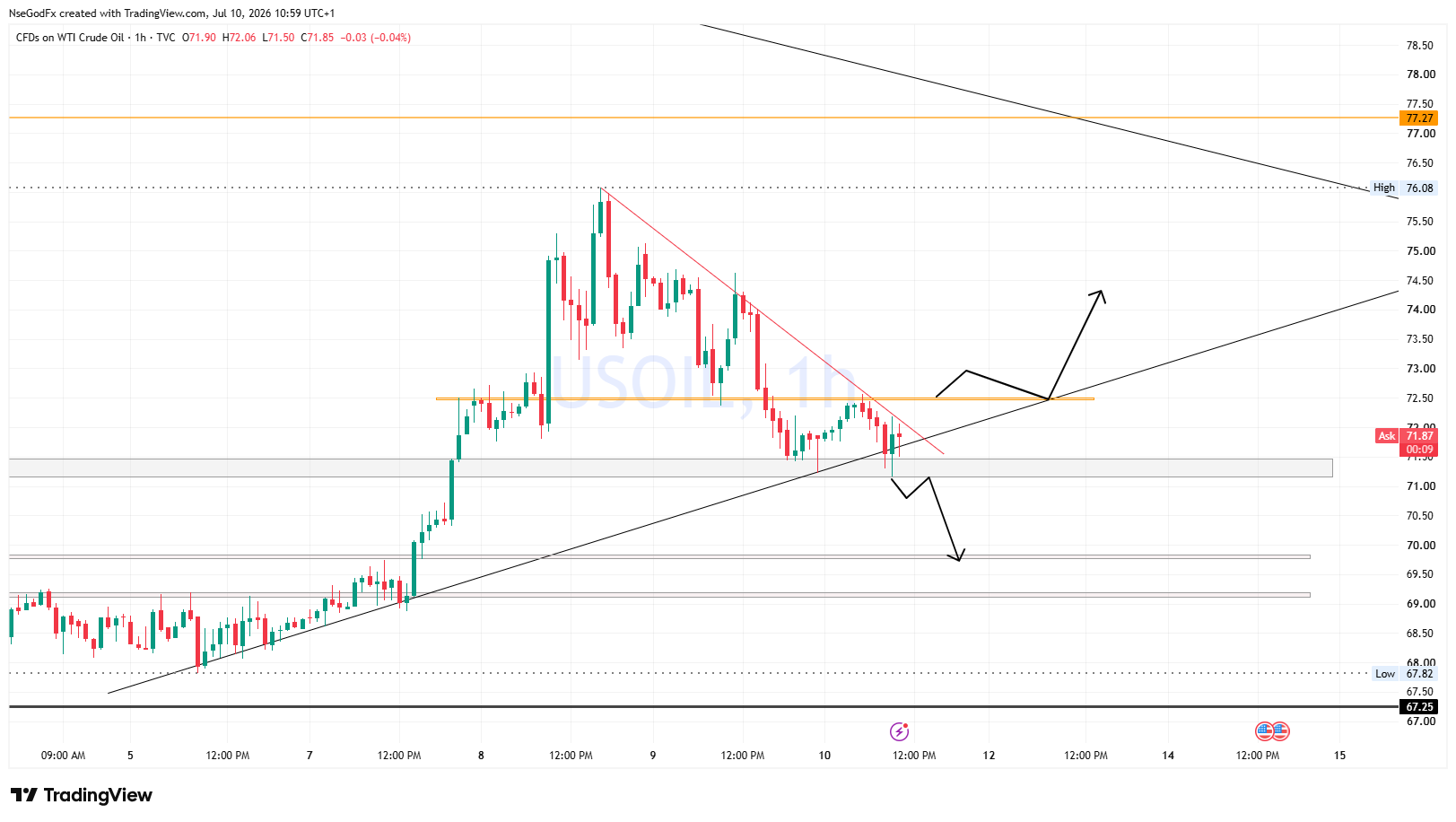
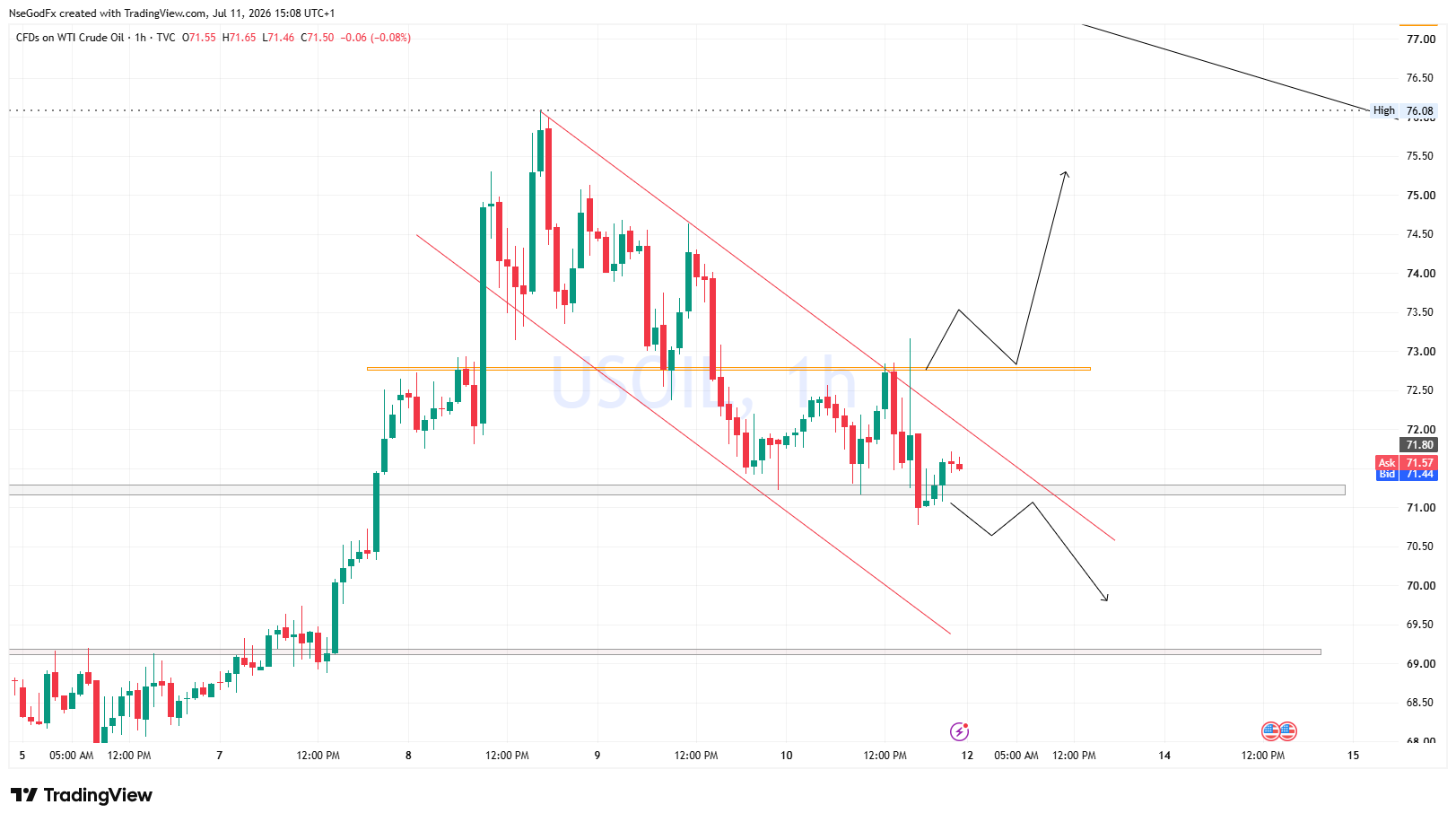
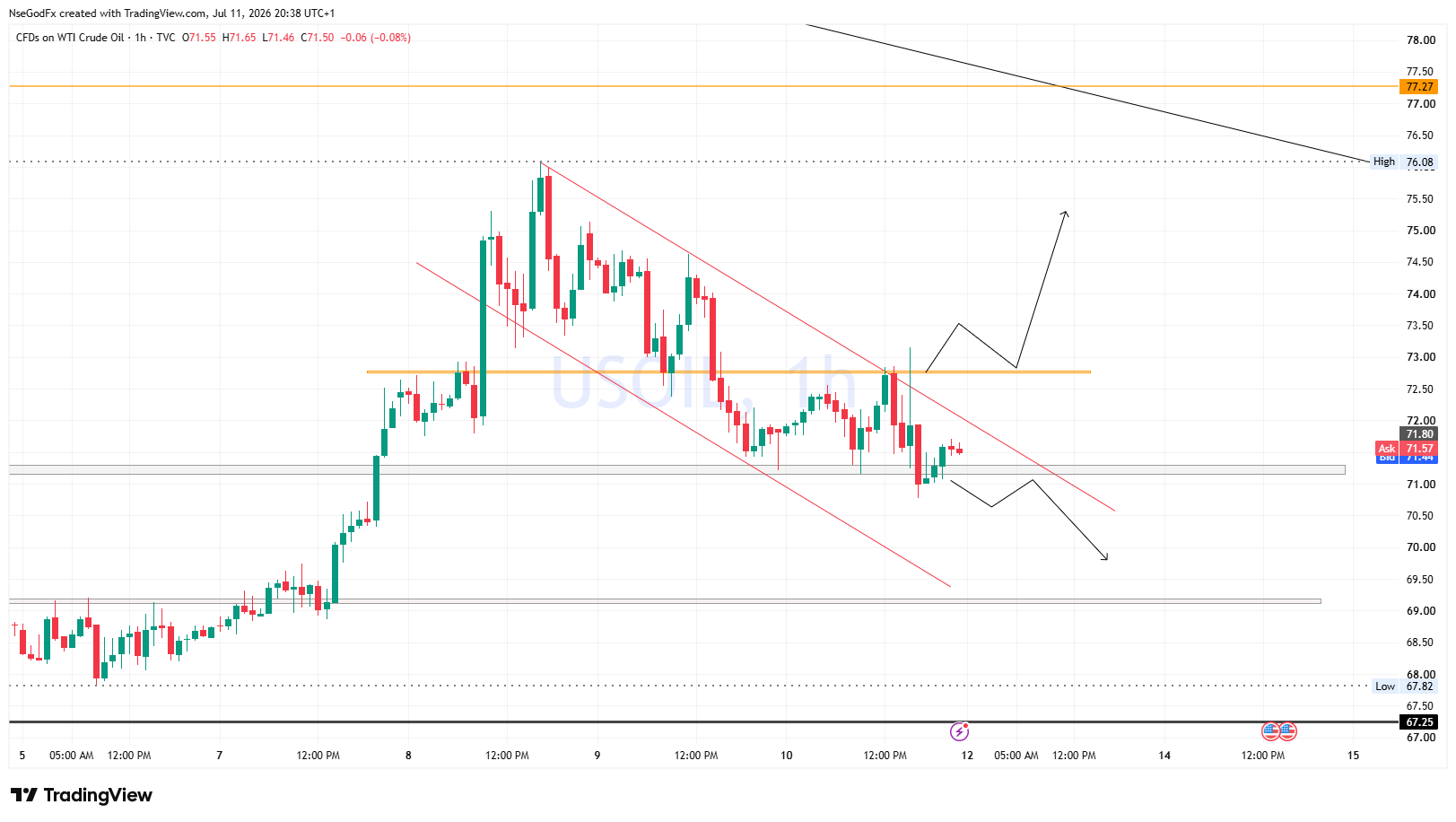
USOIL- I'll wait for price rebound to join the buy continuations at 70.00-69 .00 support region.

Usoil is showing rejections at the rectangle level, just wait for a breakout from that rectangle with strong bullish volume before buying

N
@nsg_usd - 1 month ago
Quoted - asuquokelvin

Usoil is showing rejections at the rectangle level, just wait for a breakout from that rectangle with strong bullish volume before buying

USOIL Trade Update
Bias- Buys
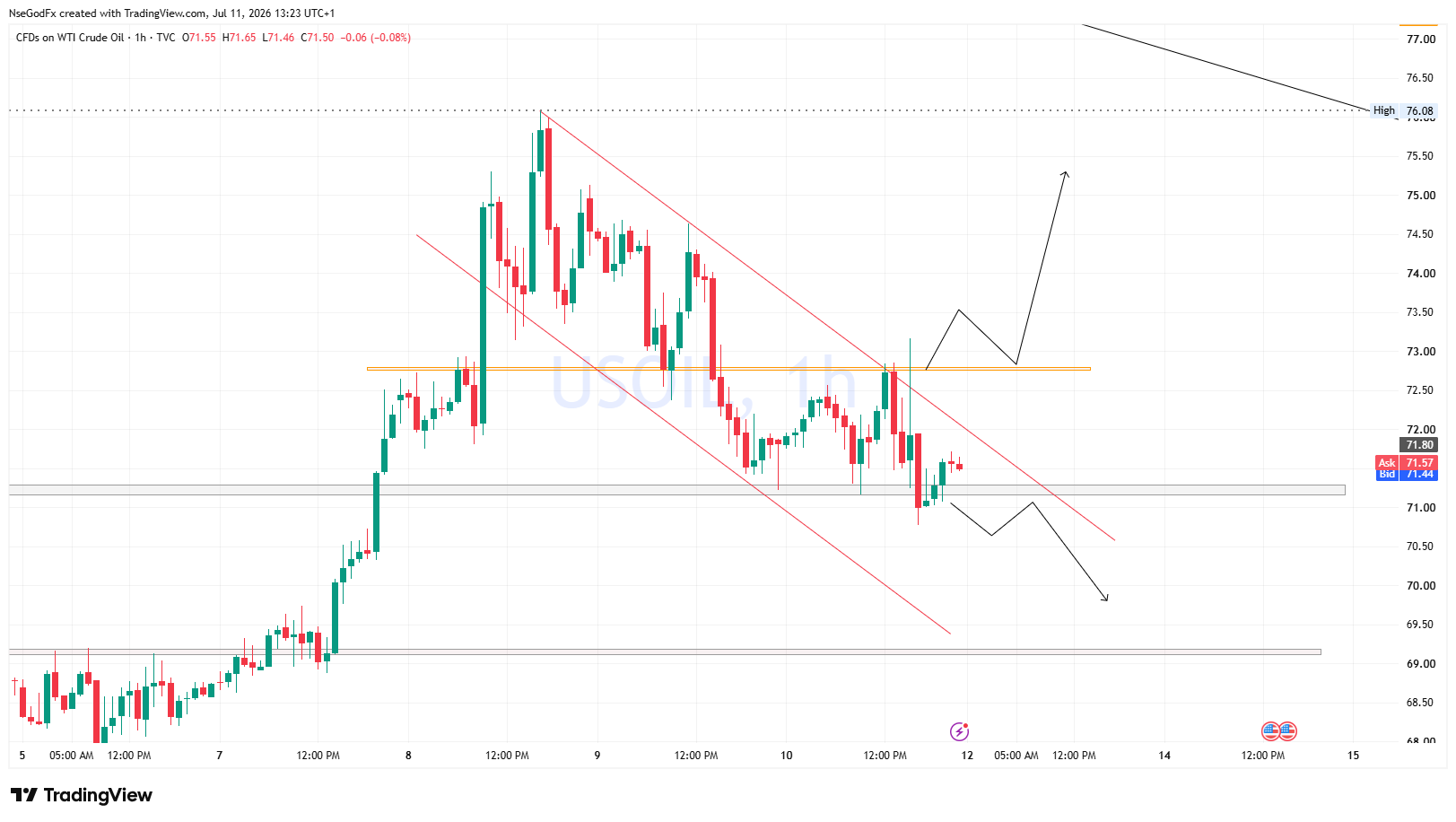
The Second bottom price is forming at that 71.46 region would have been my entry, but I still have some extra details it needs to invalidate before i consider the buys. I want to see a break above 72.47, and an invalidation of that bearish trendline, then join on the rebound.

C
@chris_4eva - 1 month ago

Please what's the difference between brent oil and wti crude?

A
@asuquokelvin - 1 month ago
Quoted - chris_4eva

Please what's the difference between brent oil and wti crude?

Brent Oil

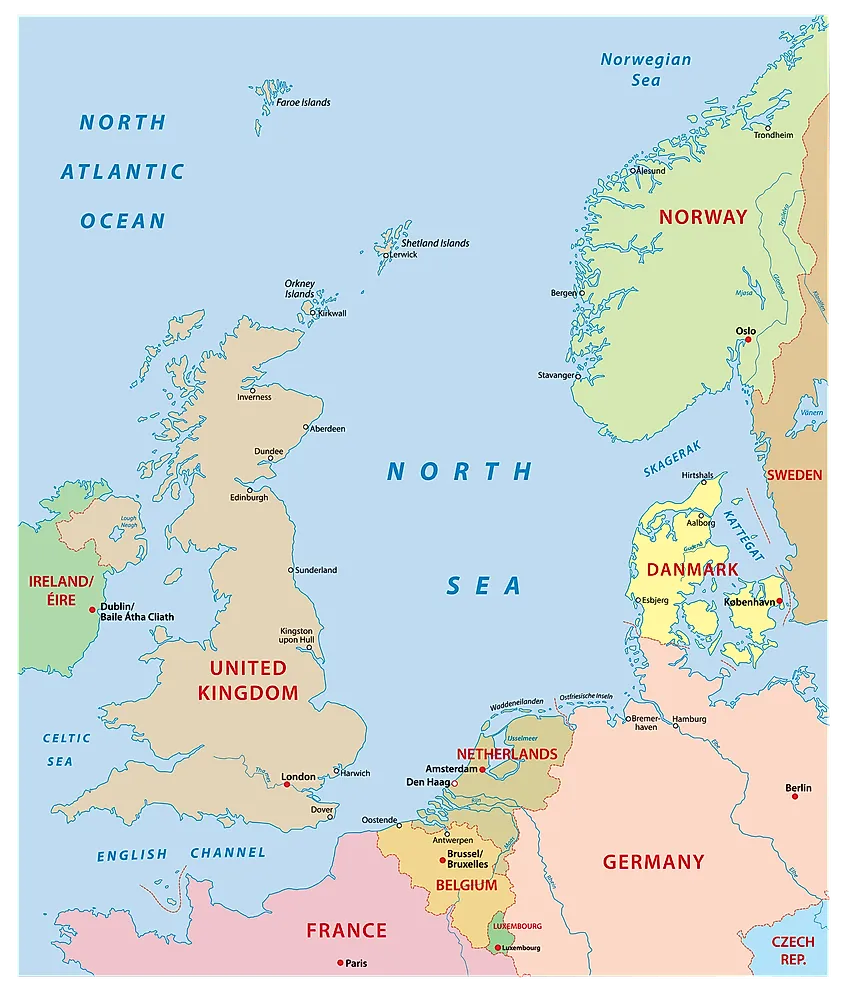
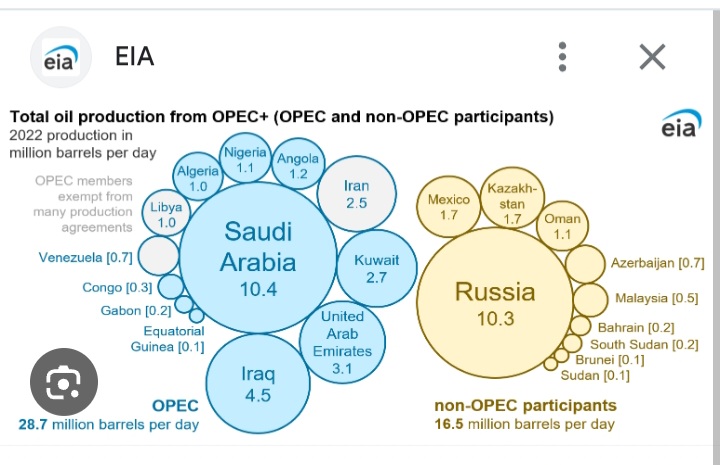
Comes from the North Sea , between the UK and Norway

It is the global benchmark for oil prices.

Many countries in Europe, Africa, and the Middle East use Brent as their pricing reference.

Think of Brent as the "international oil price."

WTI : West Texas Intermediate Crude

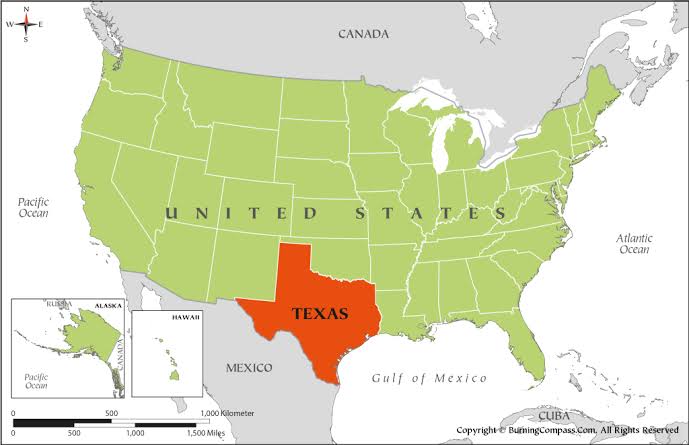
Comes from Texas, USA.

It is the main benchmark for oil in the United States.

WTI is usually a little lighter and cleaner, making it slightly easier and cheaper to refine into fuels like petrol

Think of WTI as America crude oil

A
@asuquokelvin - 1 month ago
Quoted - chris_4eva

what of the quality, do they have the same quality because is see their prices are different

Their quality is not the same Brent is slightly heavier and contains a little more sulphur

While WTI is higher quality because it is lighter and contains less sulphur

And this quality make it easier and cheaper to refine into diesel and petrol

N
@nsg_usd - 1 month ago
Quoted - asuquokelvin

Oil reacting at the rectangle zone, if oil pushes higher then we will see gold and other pairs doing well

If US Oil is able to break above 72.7-73.00 price level, then we'll still a strong rally to the upside next week. but a break below 71.00, will result in price decline back to 69.00

A
@asuquokelvin - 1 month ago
Quoted - nsg_usd

If US Oil is able to break above 72.7-73.00 price level, then we'll still a strong rally to the upside next week. but a break below 71.00, will result in price decline back to 69.00

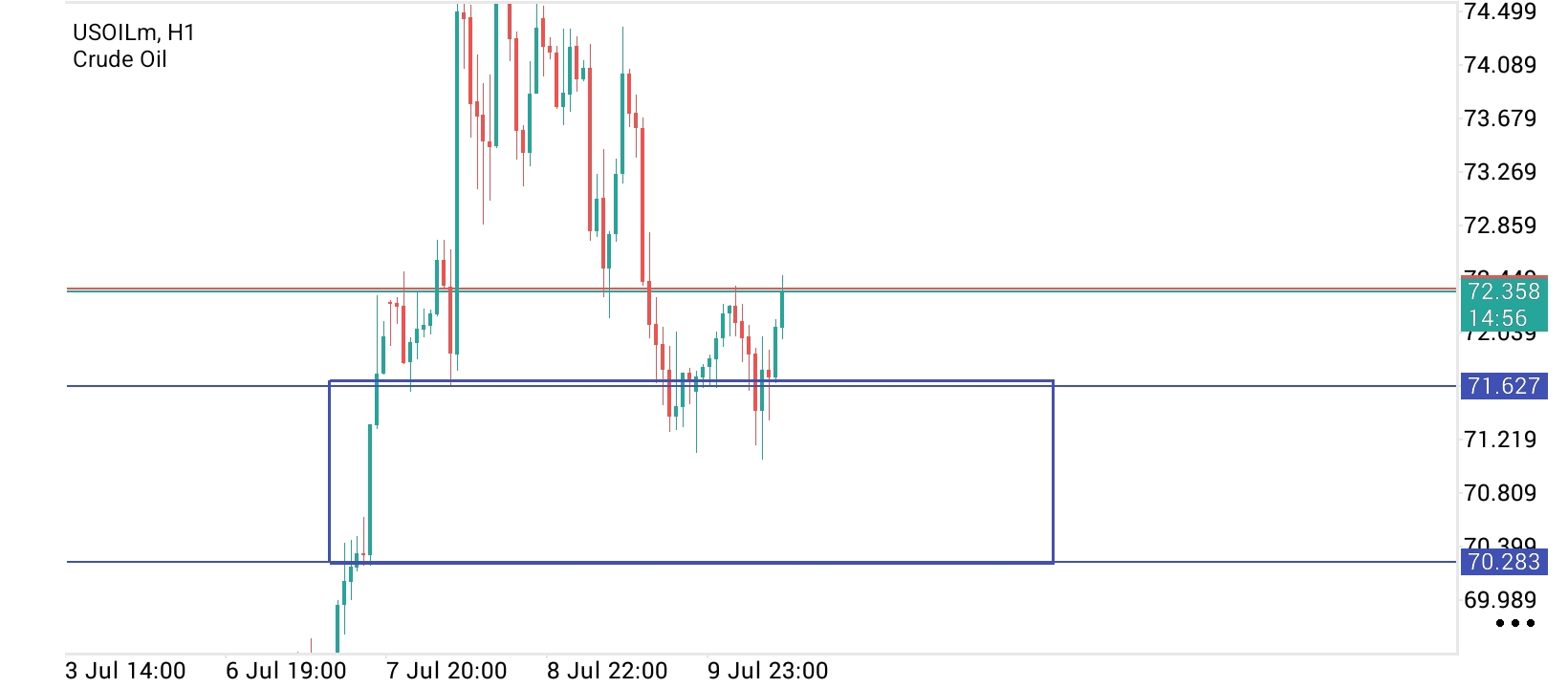
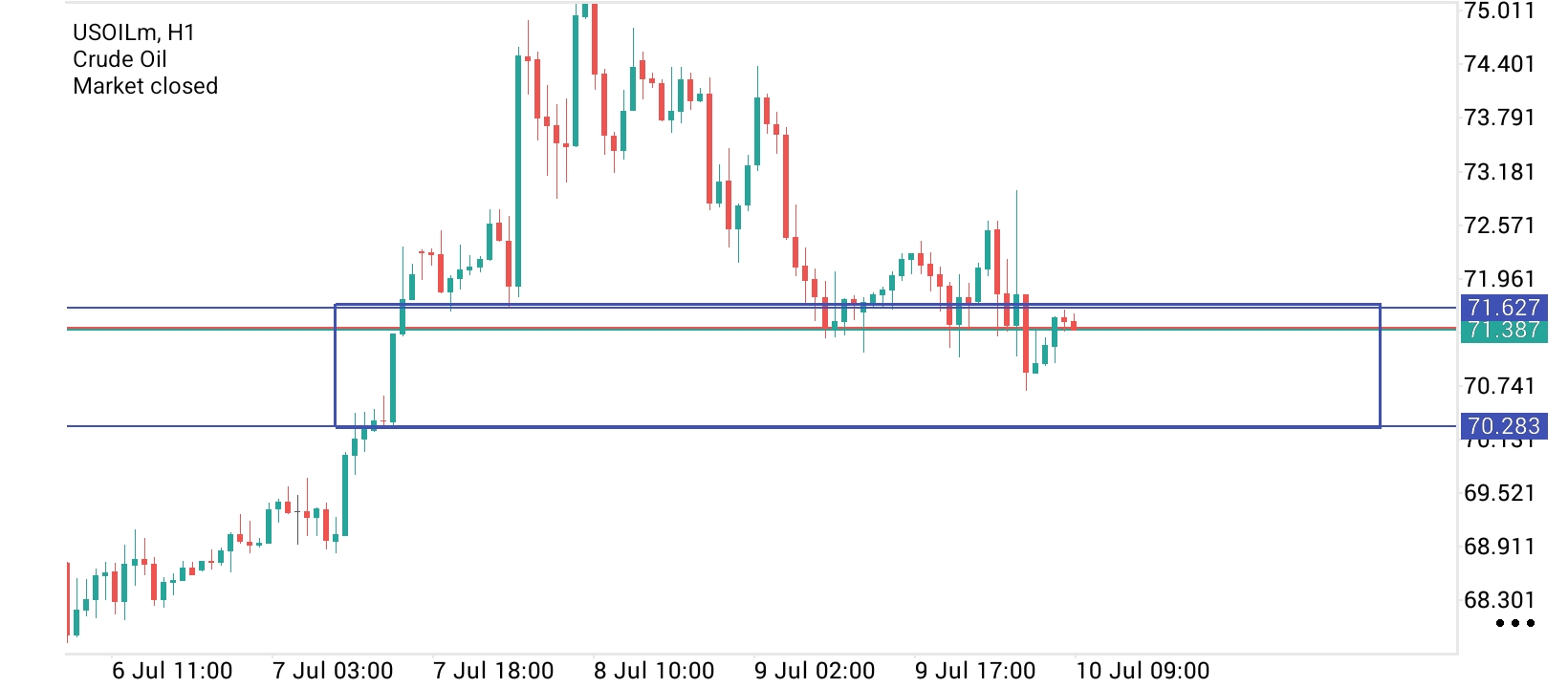
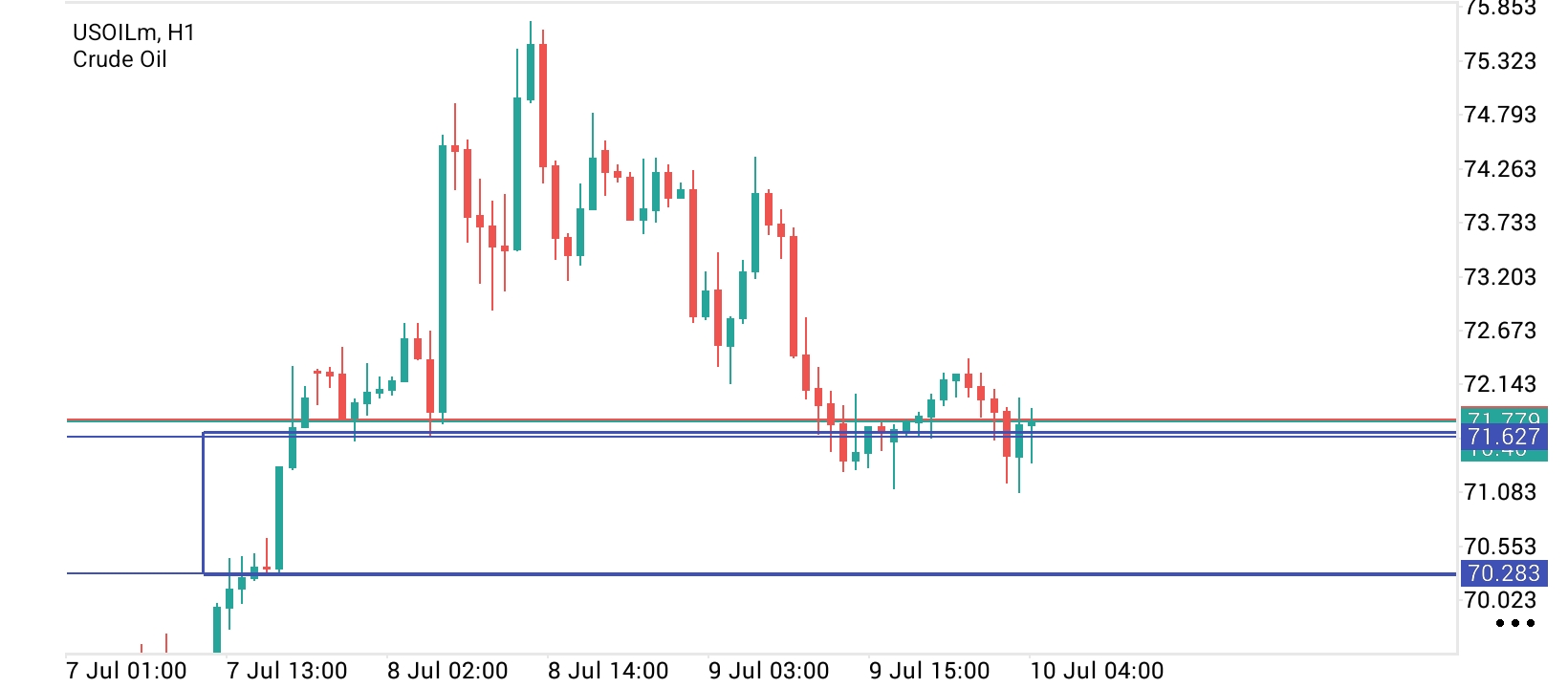
Us oil is just trying to gain some momentum from that level, the 70.283 is the lower part of the fair value gap from the left side that I marked with the rectangle so if price breaks it, be rest assured for a more downside but price can react off that zone for a buy let's just wait untill market open

N
@nsg_usd - 1 month ago
Quoted - chris_4eva

Please what's the difference between brent oil and wti crude?

Differences Between Brent (UK) Oil, and West Texas Intermediate (US) Oil (part 1)

Their differences is mostly in their Origin, Quality, pricing, and Market influence.


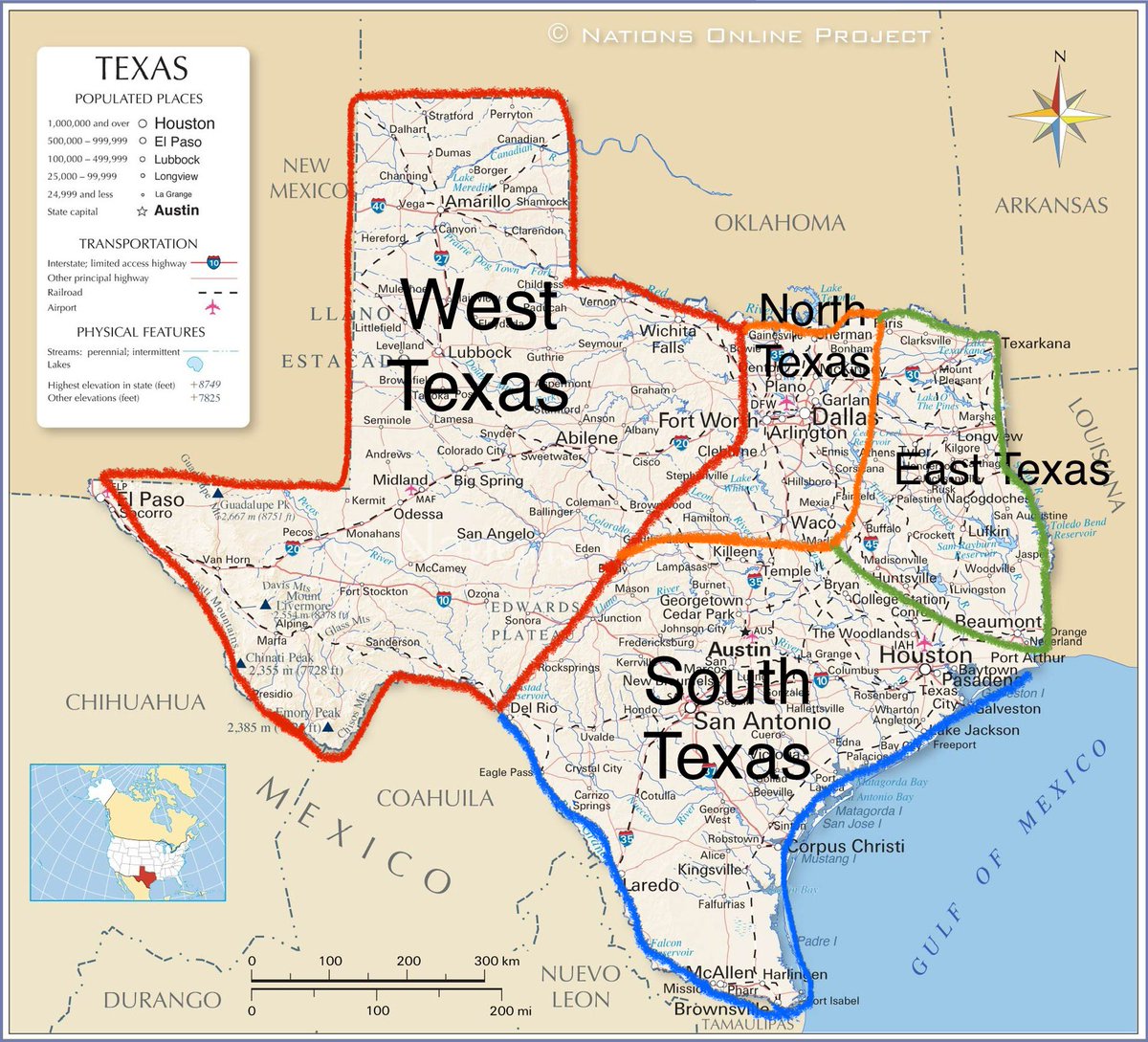
Origin: Brent is an Offshore Oil (Oil fields from North Sea between UK and Norway), while WTI is an Onshore Oil (Oil fields on land in West Texas(New Mexico, North Dakota).

Quality: WTI is lighter to refine than Brent because it has less sulphur and is referred to as a "sweeter Crude" than Brent.

Because it is lighter to refine, it means it is of higher quality and considered technically superior to Brent. that means it's easier and cheaper to refine WTI into products like diesel and gasoline (fuel). This is one reason that attracts buyers to WTI.

N
@nsg_usd - 1 month ago
Quoted - nsg_usd

Differences Between Brent (UK) Oil, and West Texas Intermediate (US) Oil (part 1)

Their differences is mostly in their Origin, Quality, pricing, and Market influence.


Origin: Brent is an Offshore Oil (Oil fields from North Sea between UK and Norway), while WTI is an Onshore Oil (Oil fields on land in West Texas(New Mexico, North Dakota).

Quality: WTI is lighter to refine than Brent because it has less sulphur and is referred to as a "sweeter Crude" than Brent.

Because it is lighter to refine, it means it is of higher quality and considered technically superior to Brent. that means it's easier and cheaper to refine WTI into products like diesel and gasoline (fuel). This is one reason that attracts buyers to WTI.

Differences Between Brent (UK) Oil, and West Texas Intermediate WTI (US) Oil (part 2)

Pricing: Brent is more expensive than WTI. This is because it is easily exported through sea globally than WTI. and also that's why it's the world's global benchmark (standard price tag), while WTI is the benchmark for US Oil Market.

By global benchmark, it means Most oil producing countries weighs the price of their crude, by Brent price (Reference Price), not WTI.

For Example if Brent = $100 per barrel, and a buyer wants to buy Nigerian crude which is priced at (Brent + $10 per barrel). The final price for the Nigerian Crude Oil = $100+$10 which equals $110 per barrel. and that will be the price of the Nigerian crude Oil. if brent decreases to $50 per barrel, the Nigerian Crude will be priced at $50+$10= $60 per barrel for the Nigerian Crude.

So Local Crude price changes when the global benchmark changes, not when WTI changes.

Since Brent is more expensive than WTI, the Price difference between Brent and WTI is Called the "Brent-WTI spread". This is a very important indicator for oil traders because a wide or narrow spread provides clues where the Supply or demand is changing, and balance between Global oil market and US Oil market.

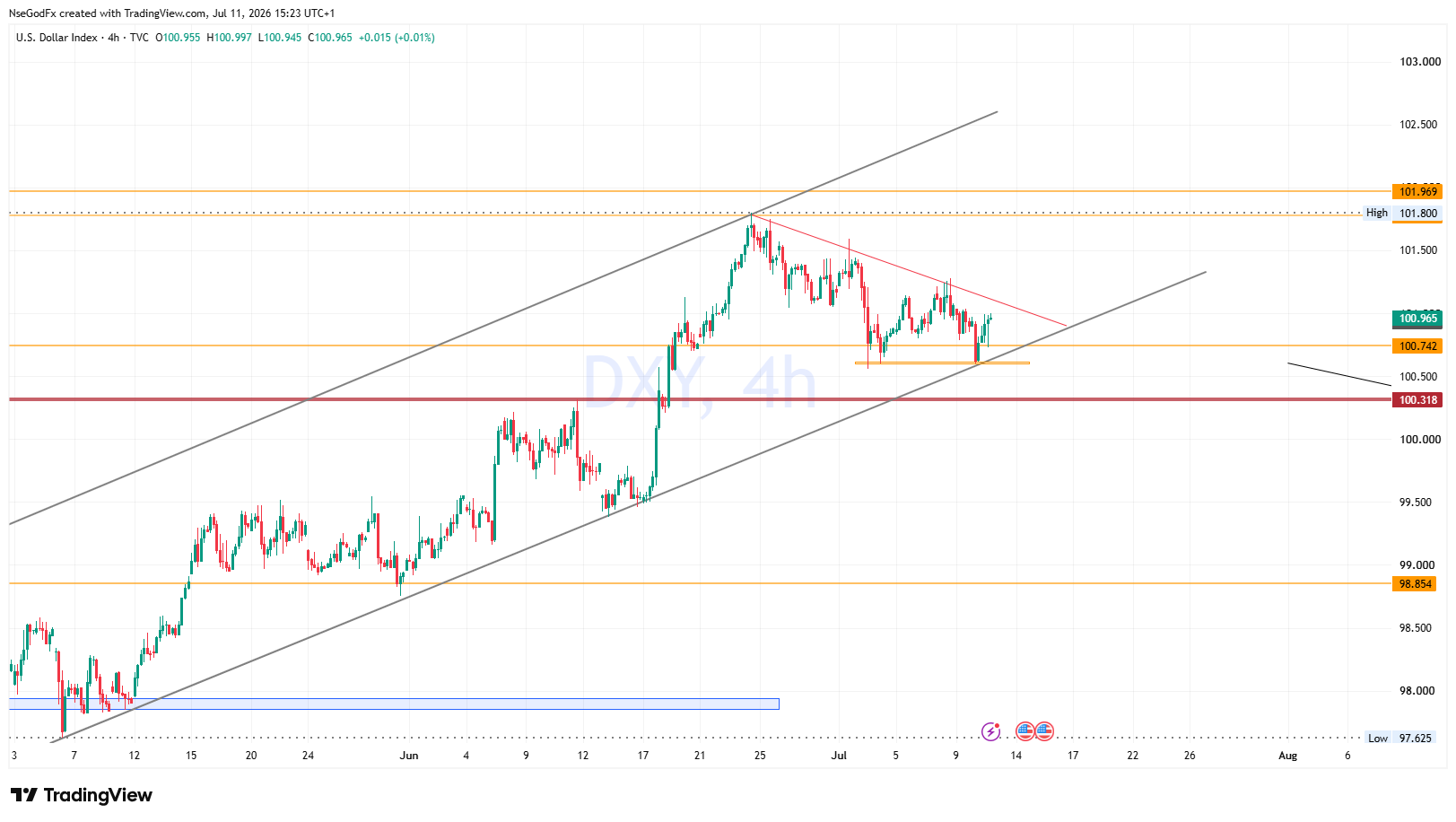
Both WTI and Brent are priced in US Dollars (global standardization and world reserve currency). This is why changes in DXY influences both Oil prices. But geopolitical events and supply and demand fundamentals often has a larger impact on them than DXY.

N
@nsg_usd - 1 month ago
Quoted - nsg_usd

Differences Between Brent (UK) Oil, and West Texas Intermediate WTI (US) Oil (part 2)

Pricing: Brent is more expensive than WTI. This is because it is easily exported through sea globally than WTI. and also that's why it's the world's global benchmark (standard price tag), while WTI is the benchmark for US Oil Market.

By global benchmark, it means Most oil producing countries weighs the price of their crude, by Brent price (Reference Price), not WTI.

For Example if Brent = $100 per barrel, and a buyer wants to buy Nigerian crude which is priced at (Brent + $10 per barrel). The final price for the Nigerian Crude Oil = $100+$10 which equals $110 per barrel. and that will be the price of the Nigerian crude Oil. if brent decreases to $50 per barrel, the Nigerian Crude will be priced at $50+$10= $60 per barrel for the Nigerian Crude.

So Local Crude price changes when the global benchmark changes, not when WTI changes.

Since Brent is more expensive than WTI, the Price difference between Brent and WTI is Called the "Brent-WTI spread". This is a very important indicator for oil traders because a wide or narrow spread provides clues where the Supply or demand is changing, and balance between Global oil market and US Oil market.

Both WTI and Brent are priced in US Dollars (global standardization and world reserve currency). This is why changes in DXY influences both Oil prices. But geopolitical events and supply and demand fundamentals often has a larger impact on them than DXY.

Differences Between Brent (UK) Oil, and West Texas Intermediate (US) Oil (part 3)

Market Influence: Brent Oil is the main benchmark for Europe, Africa and Middle East ( 2/3 of the world's international crude oil trade), while WTI is the main benchmark for North America.

Brent Oil is more sensitive to the following Economic data.

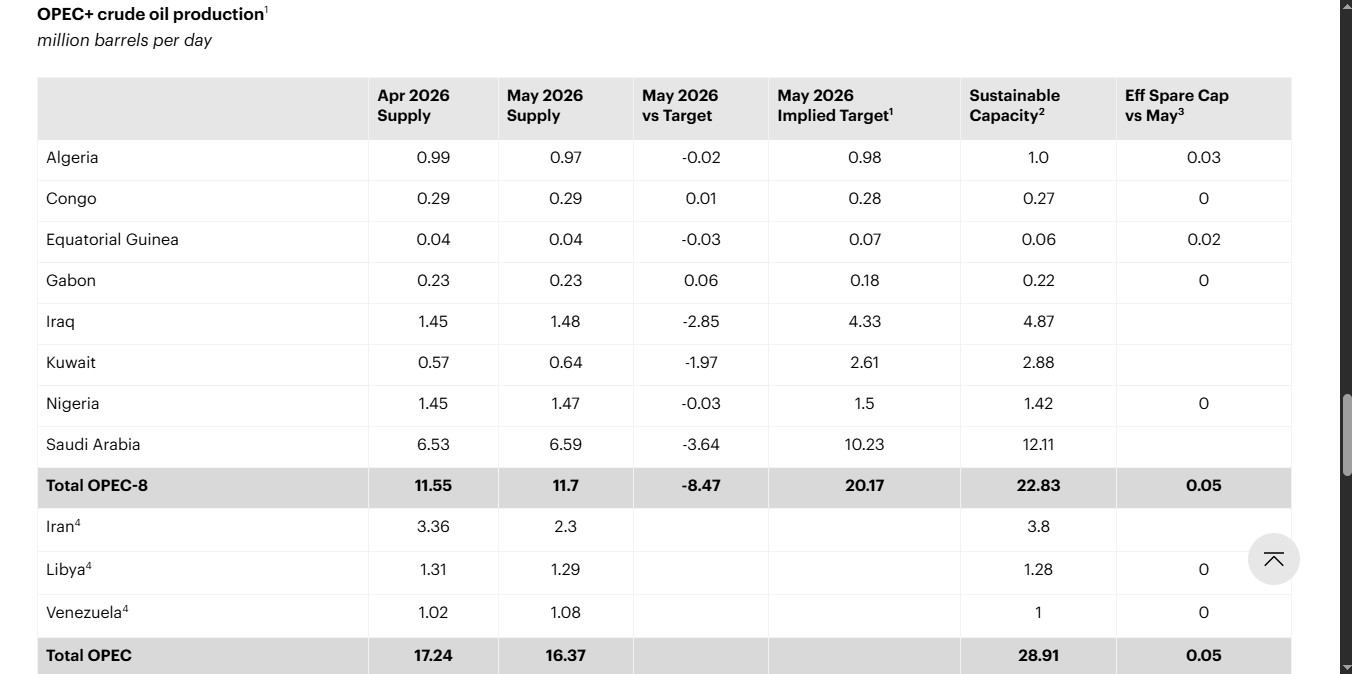
a) OPEC+ production decisions (OPEC Monthly Oil Market Report (MOMR)
b) Geopolitical events in the middle east
c)International Energy Agency (IEA) Oil Market Report (OMR)
d) shipping disruptions and international demand.

WTI (US) Oil is more sensitive to the following Economic data

a) EIA Crude Oil inventories (released every wednesday)
b) API Crude Oil stocks (released every tuesday)
c) ISM Manufacturing PMI.
d) Fundamental data that affects DXY such as FOMC meetings, NFP, CPI also has great impact on WTI.

Overall, Brent reacts more strongly to Opec+ decisions and geopolitical developments while WTI is more sensitive to US. economic data.

N
@nsg_usd - 1 month ago
Quoted - asuquokelvin

They have little difference, ukoil is the international benchmark for crude oil, representing oil produced primarily from the North Sea and used to price most of the world's oil.

While

The Usoil is the US benchmark for crude oil, representing oil produced primarily in the United States and used to price oil in the North American market.

I was talking about their technical structure, they are the same. but their pricing is different. Brent is priced higher than WTI that's why on charts the prices are different.

Their market structure is the same because they are both priced in US Dollars.
But for international crude oil trades, Brent is the global benchmark.

A
@asuquokelvin - 1 month ago
Quoted - nsg_usd

Differences Between Brent (UK) Oil, and West Texas Intermediate WTI (US) Oil (part 2)

Pricing: Brent is more expensive than WTI. This is because it is easily exported through sea globally than WTI. and also that's why it's the world's global benchmark (standard price tag), while WTI is the benchmark for US Oil Market.

By global benchmark, it means Most oil producing countries weighs the price of their crude, by Brent price (Reference Price), not WTI.

For Example if Brent = $100 per barrel, and a buyer wants to buy Nigerian crude which is priced at (Brent + $10 per barrel). The final price for the Nigerian Crude Oil = $100+$10 which equals $110 per barrel. and that will be the price of the Nigerian crude Oil. if brent decreases to $50 per barrel, the Nigerian Crude will be priced at $50+$10= $60 per barrel for the Nigerian Crude.

So Local Crude price changes when the global benchmark changes, not when WTI changes.

Since Brent is more expensive than WTI, the Price difference between Brent and WTI is Called the "Brent-WTI spread". This is a very important indicator for oil traders because a wide or narrow spread provides clues where the Supply or demand is changing, and balance between Global oil market and US Oil market.

Both WTI and Brent are priced in US Dollars (global standardization and world reserve currency). This is why changes in DXY influences both Oil prices. But geopolitical events and supply and demand fundamentals often has a larger impact on them than DXY.

The Brent-WTI spread is definitely worth monitoring. A widening spread often points to stronger global supply concerns, while a narrowing spread can suggest improving international supply or relatively tighter conditions in the US market. It's a useful confirmation alongside inventory data and OPEC headlines.

A
@asuquokelvin - 1 month ago
Quoted - nsg_usd

I was talking about their technical structure, they are the same. but their pricing is different. Brent is priced higher than WTI that's why on charts the prices are different.

Their market structure is the same because they are both priced in US Dollars.
But for international crude oil trades, Brent is the global benchmark.

Their price levels differ because Brent trades at a premium, but the underlying market structure is often very similar. That's why I use one to confirm the other, while still respecting the Brent-WTI spread during major fundamental events.

G
@godspowerdan - 1 month ago
Quoted - nsg_usd

Differences Between Brent (UK) Oil, and West Texas Intermediate WTI (US) Oil (part 2)

Pricing: Brent is more expensive than WTI. This is because it is easily exported through sea globally than WTI. and also that's why it's the world's global benchmark (standard price tag), while WTI is the benchmark for US Oil Market.

By global benchmark, it means Most oil producing countries weighs the price of their crude, by Brent price (Reference Price), not WTI.

For Example if Brent = $100 per barrel, and a buyer wants to buy Nigerian crude which is priced at (Brent + $10 per barrel). The final price for the Nigerian Crude Oil = $100+$10 which equals $110 per barrel. and that will be the price of the Nigerian crude Oil. if brent decreases to $50 per barrel, the Nigerian Crude will be priced at $50+$10= $60 per barrel for the Nigerian Crude.

So Local Crude price changes when the global benchmark changes, not when WTI changes.

Since Brent is more expensive than WTI, the Price difference between Brent and WTI is Called the "Brent-WTI spread". This is a very important indicator for oil traders because a wide or narrow spread provides clues where the Supply or demand is changing, and balance between Global oil market and US Oil market.

Both WTI and Brent are priced in US Dollars (global standardization and world reserve currency). This is why changes in DXY influences both Oil prices. But geopolitical events and supply and demand fundamentals often has a larger impact on them than DXY.

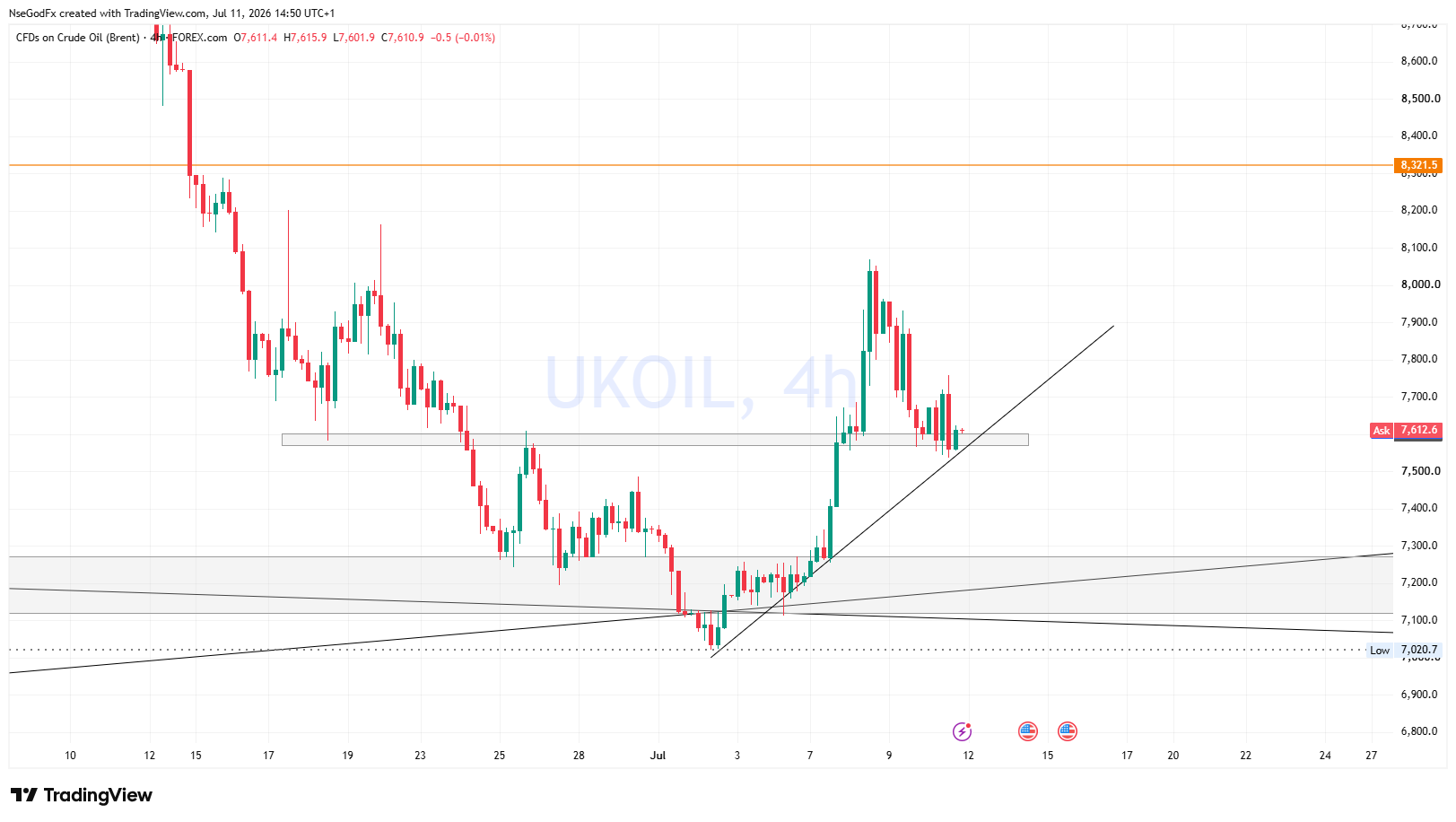
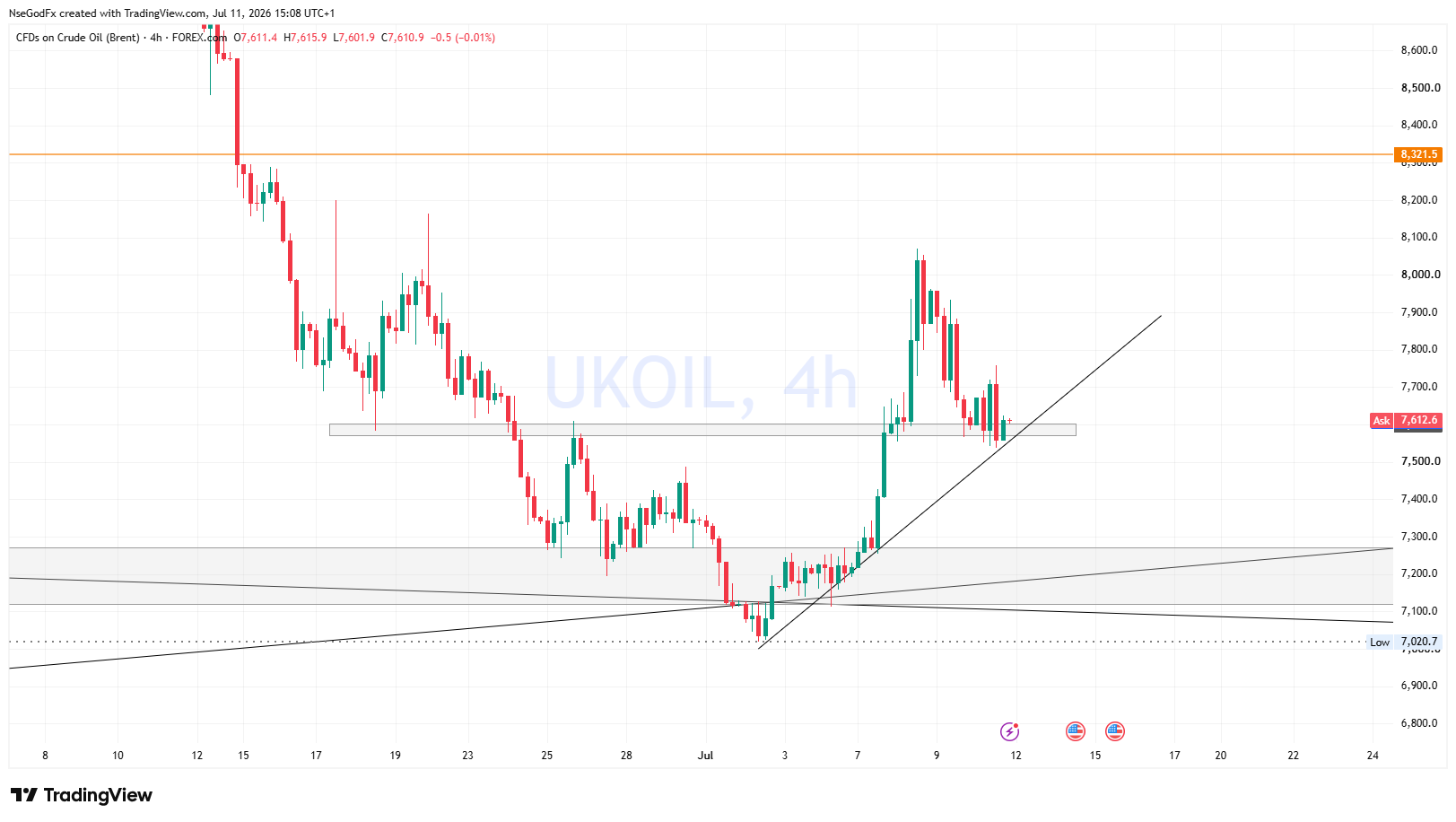
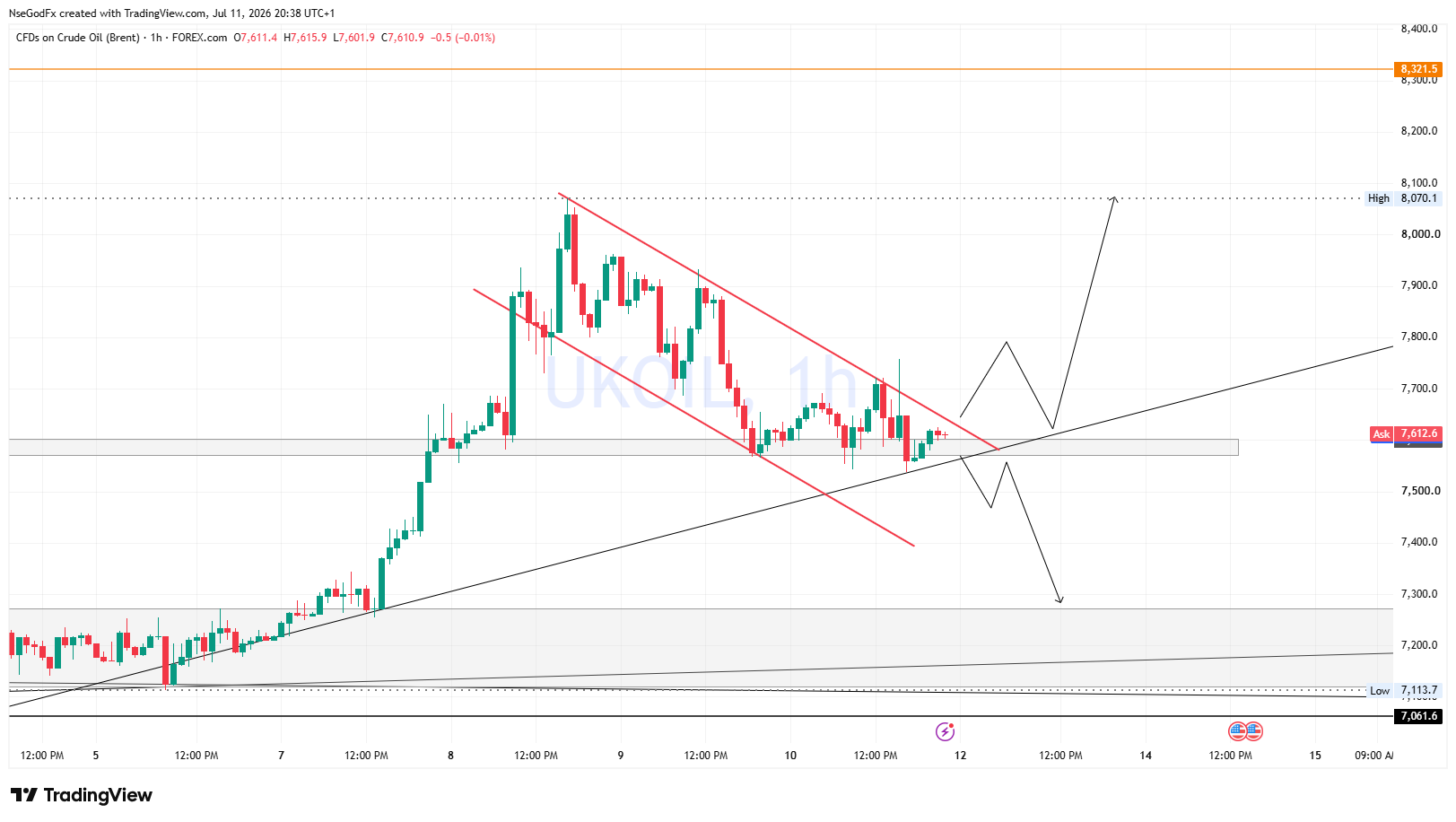
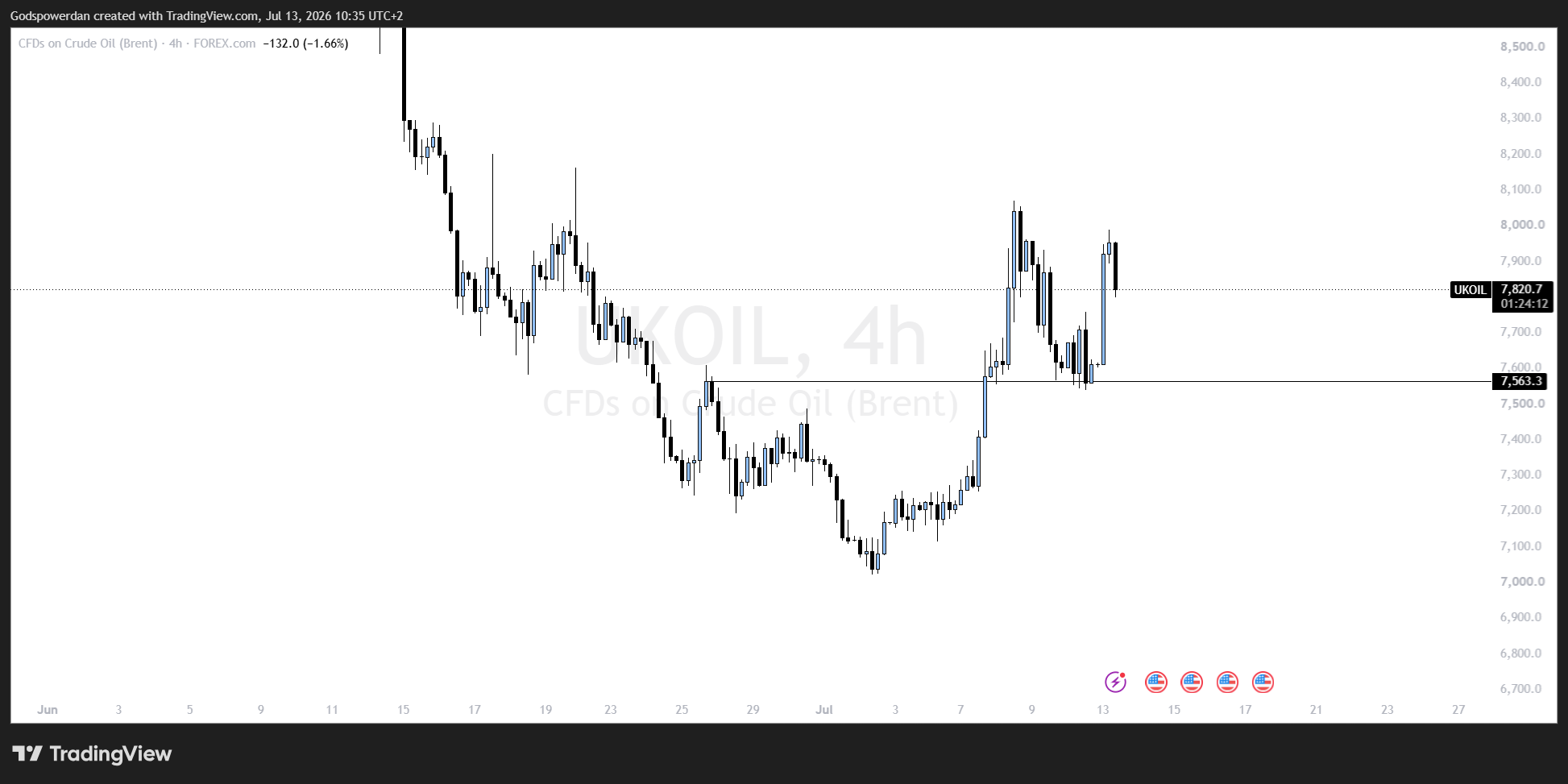
Price has reacted from that support level 7563.3. The buys had already started

N
@nsg_usd - 1 month ago
Quoted - godspowerdan

Price has reacted from that support level 7563.3. The buys had already started
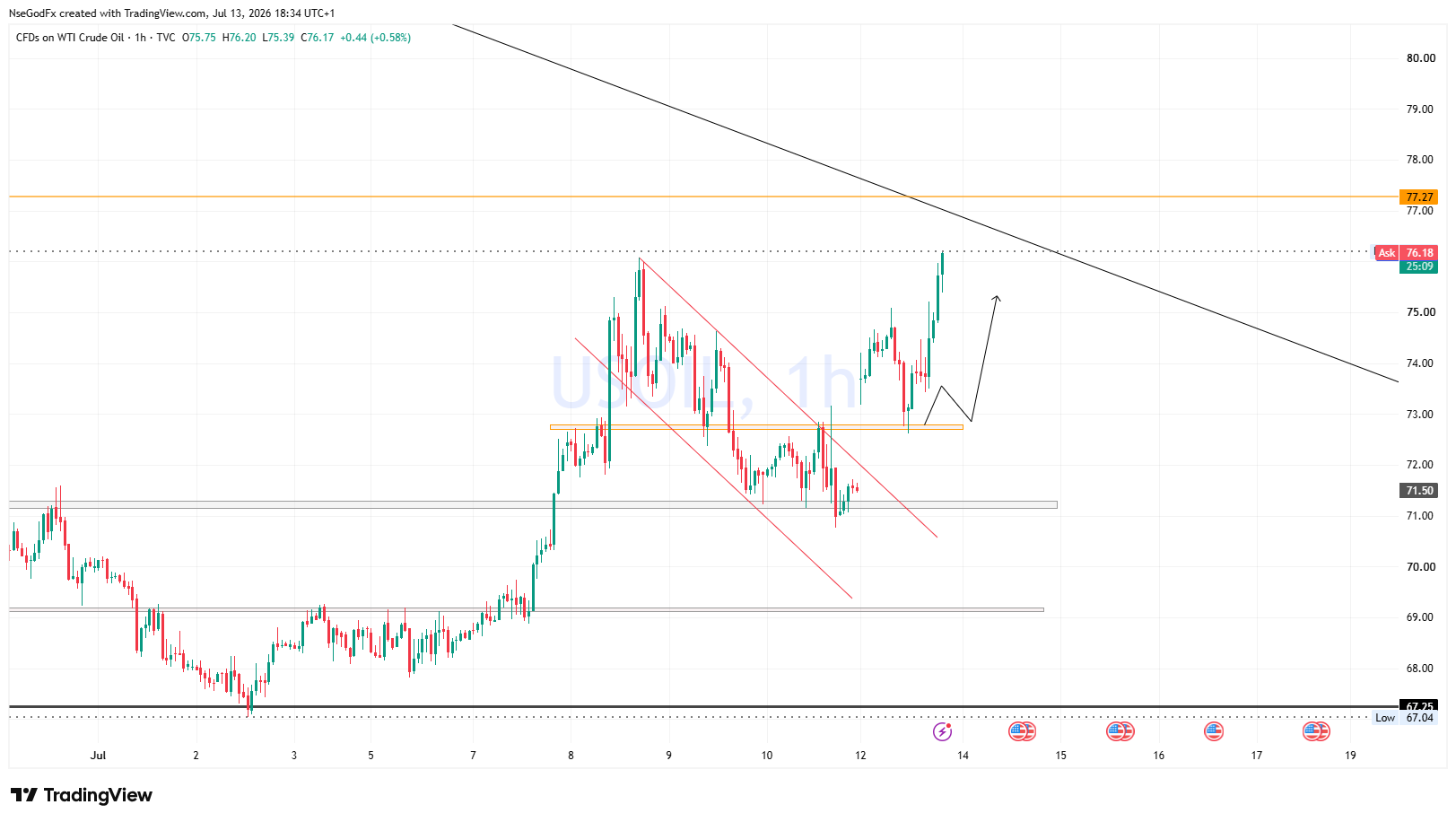
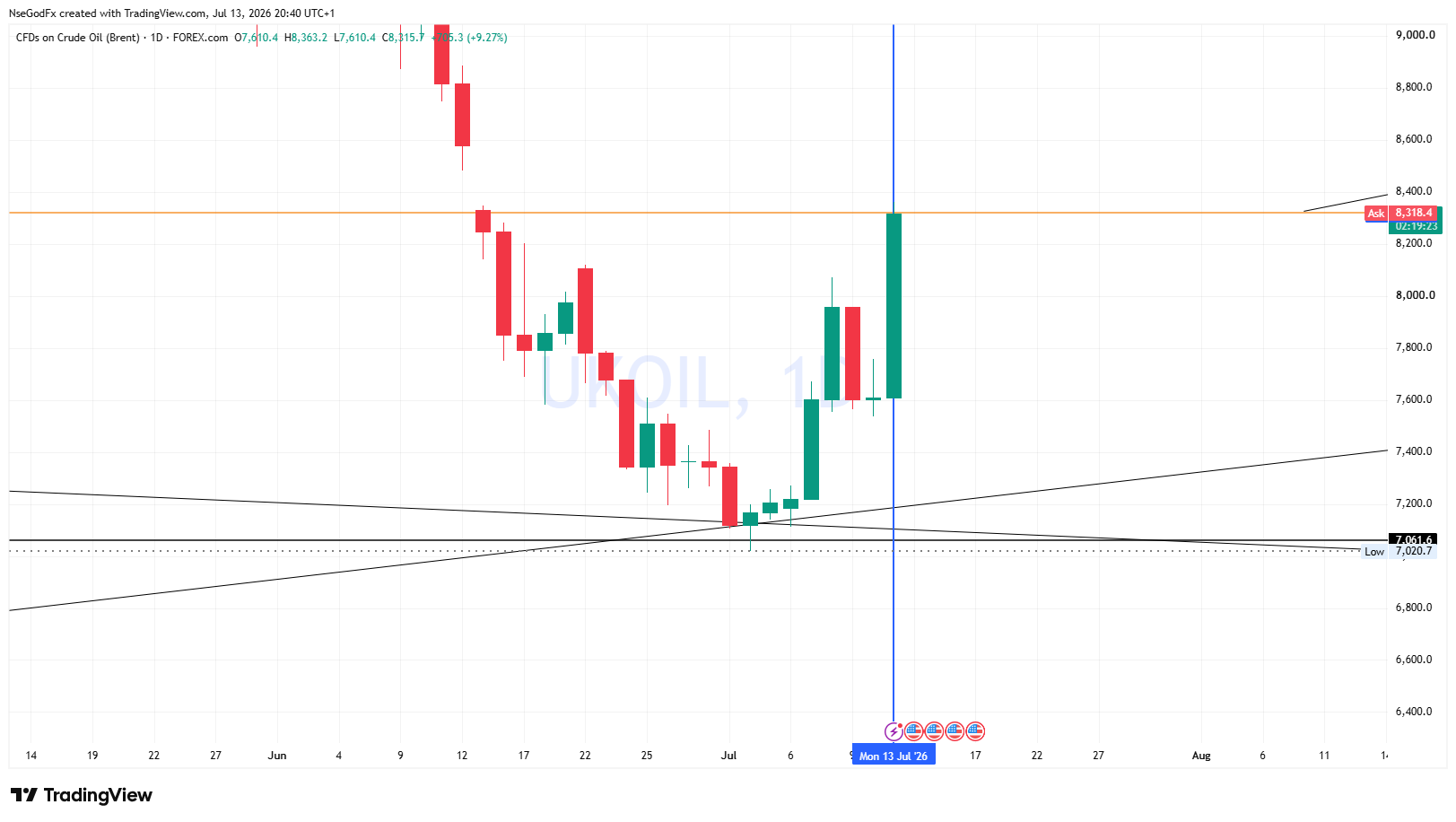
My goodness- i missed this. USOIl the retest of that zone was a very good entry.

G
@godspowerdan - 1 month ago
Quoted - nsg_usd

My goodness- i missed this. USOIl the retest of that zone was a very good entry.

That move was crazy

I didn't even watch it, I've missed two setups today

Disclaimer:

At MyTradingLand.com, we connect you with forex brokers and provide a community for traders. While we offer valuable information and resources, please note that we are not financial advisors and cannot provide personalized financial advice. Always conduct your own research and invest responsibly.

Community Guidelines: The MyTradingLand.com community is designed as a resource for forex traders, promoting respectful and constructive discussions. We reserve the right to remove any content that is misleading, abusive, or violates our terms of service.

Broker Information: While we may receive commissions or advertising income from some of the brokers listed, this does not imply an endorsement of any broker, nor does it affect our review process. Our evaluations are based solely on objective criteria and user feedback.

Always verify the regulatory status of any broker with your local financial authority, along with their terms and privacy policies, before engaging with them. It is crucial to conduct thorough research to ensure that you are making informed decisions.

Risk Warning: At MyTradingLand.com, we strive to provide accurate information; however, the forex market is highly volatile and can change rapidly. It is essential to verify any information before making investment decisions.

Please be aware that trading in forex involves substantial risk, and it is possible to lose more than your trading equity/investment capital. 70-90% of retail CFD traders incur losses in their trading activities as per information from various brokers.

You are solely responsible for your use of MyTradingLand.com and any trading decisions you make. We encourage all users to educate themselves thoroughly about forex trading and to consider seeking advice from qualified financial professionals.

Advertising Disclosure: We may earn commissions from recommended brokers, but our reviews are independent (not influenced by potential earnings). Sponsored content is clearly marked and doesn't reflect our views.

©2026 ©2025 All rights reserved Mytradingland.com