does unemployment rate affect the exchange rate of a currency?
Yes, the unemployment rate of a country can weaken/strengthen its currency because a high unemployment rate means people are not being productive hence the country's GDP will fall.
A country with a low GDP will not attract many foreign investors thus reducing the demand for its currency.
On the other hand, a country with a low unemployment rate means more people are being productive, working, and paying taxes so the country's GDP will increase.
A high GDP attracts foreign investors who will convert their foreign currency into the local currency thus making the local currency to strengthen.
If the US has been recording falling unemployment rate for several months, while the Swiss unemployment rate has stayed the same over the same period, then the USD/CHF exchange rate is bound to rise because the pound will weaken.
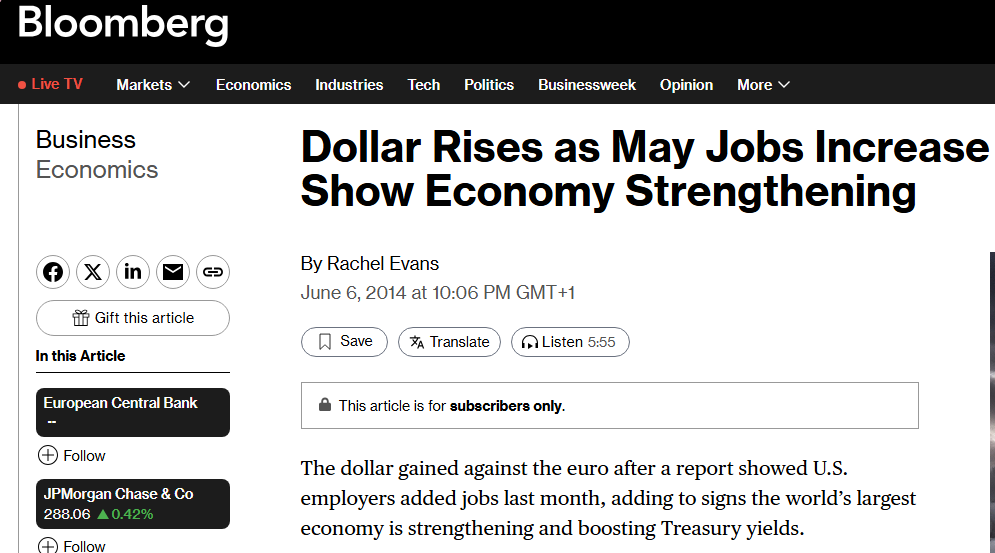
In 2014, the US dollar rallied and gained strength because the US unemployment rate kept falling, please read further via this Bloomberg news article: https://www.bloomberg.com/news/articles/2014-06-06/dollar-declines-as-fed-seen-unmoved-by-may-u-s-jobs-increase
Yes, it does and that's why people trade USD pairs immediately after the Nonfarm Payroll (NFP) US jobs report is released every month. The us dollar exchange rate will mostly rise or fall depending on the content of the NFP report.
Yes — the unemployment rate absolutely affects a country’s exchange rate, and traders use it in fundamental analysis every month, especially during NFP (Nonfarm Payrolls) in the U.S.
1. How Unemployment Rate Affects a Currency
📈 Lower Unemployment → Stronger Currency
When more people have jobs:
Consumers spend more
Businesses grow
The economy expands
The central bank may raise interest rates
➡️ Higher interest rates strengthen the currency.
📉 Higher Unemployment → Weaker Currency
When many people are out of work:
Spending slows
Business profits drop
The economy weakens
The central bank may cut interest rates
➡️ Lower interest rates weaken the currency.
So yes — unemployment strongly influences exchange rates.