BEST FOREX STRATEGY

Hy everyone, I’m creating this thread for each one of us to discuss about the strategies we use and how effective it is. Also, is there any strategy currently that is the best in the forex industry? I will be so glad so learn from you all. Thank You.

H
@headies25284 - 13 hours ago

When I started trading forex, I learnt support and resistance strategy. It was so simple to comprehend. I started making profit from the strategy but a season came when I started having multiple losses and I felt the strategy wasn’t working any longer. I didn’t stay long with the strategy to know whether it could make me profit long term.

What’s your view about support and resistance strategy.

H
@headies25284 - 10 hours ago

What’s A Forex Strategy?

A forex strategy is not just “where to buy and sell.” It is a structured decision-making framework that tells you:

When to enter a trade

When to exit (profit or loss)

How much risk to take

Why the trade makes sense

Think of it as a complete operating system for trading, not just a signal.

H
@headies25284 - 9 hours ago
Quoted - headies25284

What’s A Forex Strategy?

A forex strategy is not just “where to buy and sell.” It is a structured decision-making framework that tells you:

When to enter a trade

When to exit (profit or loss)

How much risk to take

Why the trade makes sense

Think of it as a complete operating system for trading, not just a signal.

At its core, a forex strategy is a set of rules based on logic, data, and repeatable conditions used to exploit patterns in the market.

A proper strategy answers 5 key questions:

Market condition → Trending or ranging?

Entry trigger → What confirms a trade?

Stop loss placement → Where am I wrong?

Take profit logic → Where do I exit?

Risk management → How much do I risk?

Without these, you are not trading a strategy—you are guessing.

H
@headies25284 - 8 hours ago
Quoted - headies25284

At its core, a forex strategy is a set of rules based on logic, data, and repeatable conditions used to exploit patterns in the market.

A proper strategy answers 5 key questions:

Market condition → Trending or ranging?

Entry trigger → What confirms a trade?

Stop loss placement → Where am I wrong?

Take profit logic → Where do I exit?

Risk management → How much do I risk?

Without these, you are not trading a strategy—you are guessing.

Components of a Complete Forex Strategy

A. Market Bias (Directional Understanding)

Before entering any trade, you need a bias:

Bullish (buying)

Bearish (selling)

Neutral (no trade)

Bias can come from:

Market structure (higher highs / lower lows)

Macroeconomic factors

Higher timeframe analysis

B. Setup (The Opportunity)

A setup is a repeatable pattern you wait for.

Examples:

Breakout of resistance

Pullback in a trend

Liquidity sweep and reversal

Support/resistance rejection

The key word is repeatable.

H
@headies25284 - 7 hours ago
Quoted - headies25284

Components of a Complete Forex Strategy

A. Market Bias (Directional Understanding)

Before entering any trade, you need a bias:

Bullish (buying)

Bearish (selling)

Neutral (no trade)

Bias can come from:

Market structure (higher highs / lower lows)

Macroeconomic factors

Higher timeframe analysis

B. Setup (The Opportunity)

A setup is a repeatable pattern you wait for.

Examples:

Breakout of resistance

Pullback in a trend

Liquidity sweep and reversal

Support/resistance rejection

The key word is repeatable.

C. Entry Trigger (Precision)

This is what tells you: “Now is the moment.”

Examples:

Candlestick confirmation (engulfing, rejection wick)

Break of minor structure

Momentum shift

Without a trigger, entries become emotional.

D. Stop Loss (Risk Definition)

This is where you accept:

“If price gets here, my idea is wrong.”

Good stop loss placement is usually:

Beyond structure (not random)

Based on volatility

Logical, not emotional

C
@cahaya_dewan - 7 hours ago
Quoted - headies25284

When I started trading forex, I learnt support and resistance strategy. It was so simple to comprehend. I started making profit from the strategy but a season came when I started having multiple losses and I felt the strategy wasn’t working any longer. I didn’t stay long with the strategy to know whether it could make me profit long term.

What’s your view about support and resistance strategy.

Everything we do in trading is based on support and resistance (S/R). The only problem is how to know which S/R is most credible. Picking random S/R levels for your entry/exit is not trading, only the most credible ones matter.

So which strategy are you sing now since you abandoned the S/R strategy?

H
@headies25284 - 6 hours ago
Quoted - headies25284

C. Entry Trigger (Precision)

This is what tells you: “Now is the moment.”

Examples:

Candlestick confirmation (engulfing, rejection wick)

Break of minor structure

Momentum shift

Without a trigger, entries become emotional.

D. Stop Loss (Risk Definition)

This is where you accept:

“If price gets here, my idea is wrong.”

Good stop loss placement is usually:

Beyond structure (not random)

Based on volatility

Logical, not emotional

E. Take Profit (Exit Logic)

You need a predefined exit plan:

Fixed RR (e.g., 1:2 risk-reward)

Key levels (support/resistance)

Liquidity zones

Professionals don’t just “hope” price runs—they plan exits.

F. Risk Management (The Core)

This is the most important part of any strategy.

Rules often include:

Risking 1–2% per trade

Maintaining consistent position size

Avoiding overtrading

A bad strategy with good risk management can survive.

A good strategy with bad risk management will fail.

Y
@yokoyi - 4 hours ago

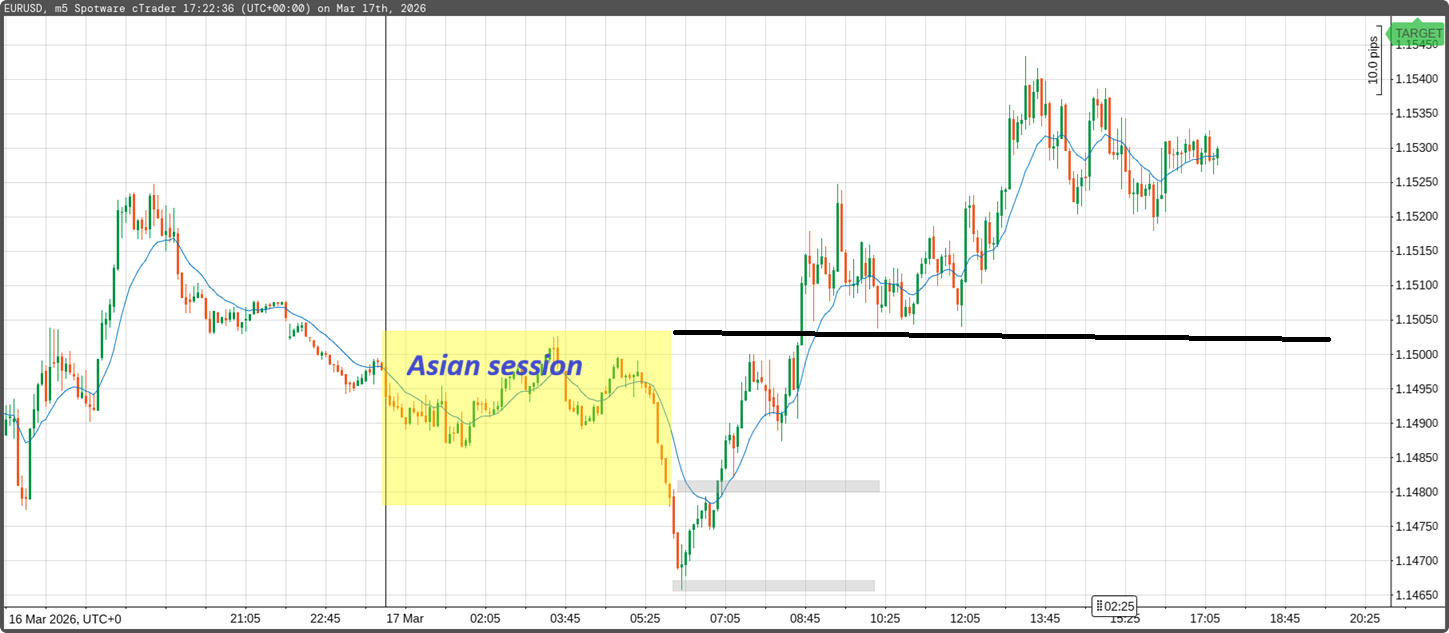
Use Sessions As Ranges (Session Breakout Strategy - best for trading currencies)

I use sessions as ranges, when price breaks out of a session two things can happen:

1. Price continues to move in the direction of the breakout

2.Price reverses back into the session range

Whatever the scenario, I can trade either the breakout and continuation or the reversal. In the eurusd 5 minute chart image I attached, price broke out of the Asian session from below but reversed back into it creating a buy opportunity. Session based strategies are the simplest and most common sense based ones, because every session has an opening time during which bidding happens during the first hour and if you know what you are doing you can detect the market direction for the remainder of the day from there.

Y
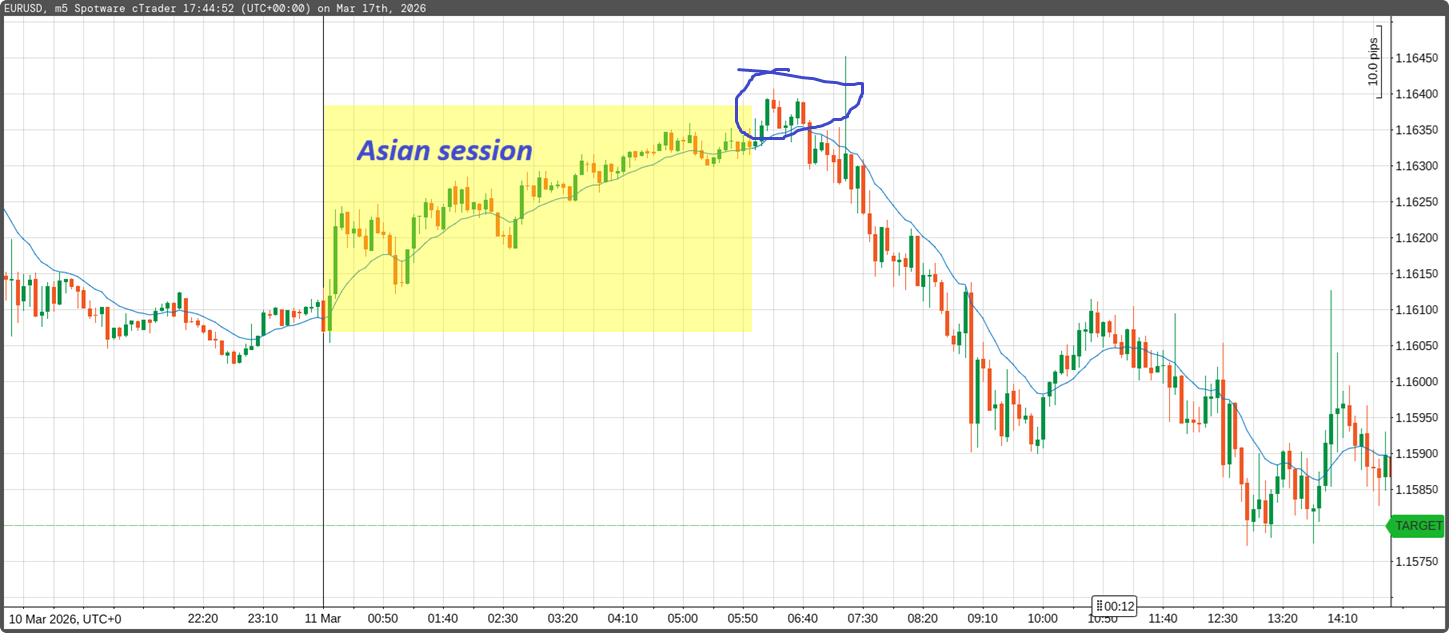
@yokoyi - 4 hours ago

Let us look at another example, in the image price broke out of the Asian session and reversed back into it, creatung a sell oportunity in its trail. Session based strategies can be traded by anyone without breaking a sweat. But as is always the case, people prefer to trade more complex strategies to feed their ego.