How do Forex Brokers Make Money?

Hi everyone,

I want to know the major sources of income for forex brokers and is it true that when traders make profits the forex broker loses money?

K
@karbin - 1 year ago

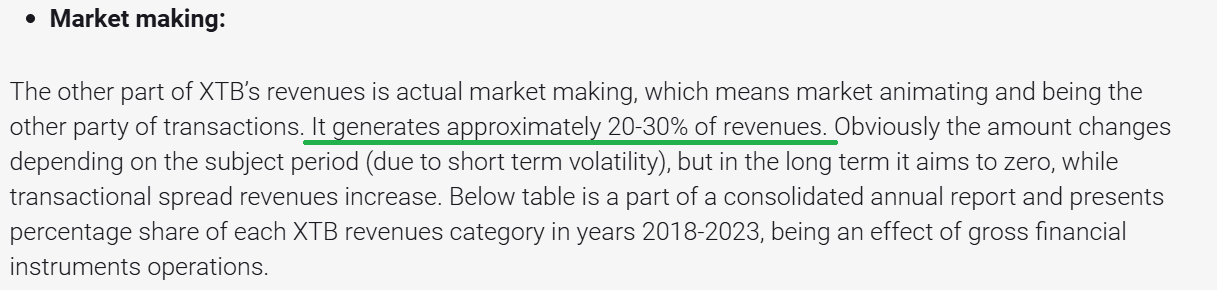
Forex Brokers primarily make money from commissions, spreads, market making activities & swap fees etc.

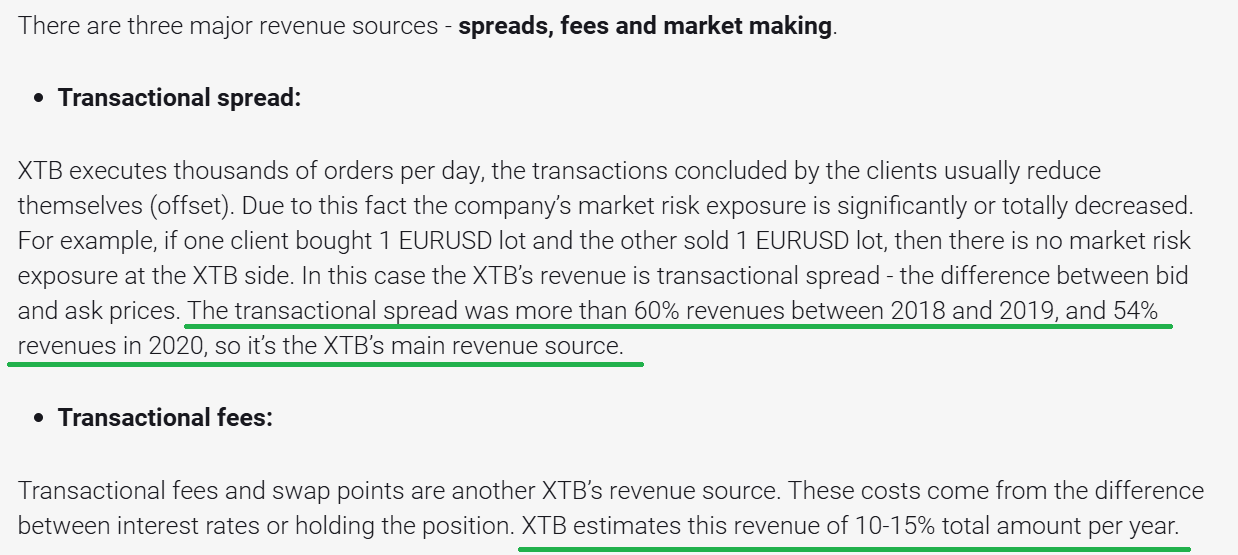
Refer to the attached screenshot revenue breakdown from a broker's website.

1. Spreads, Commissions & Swap Charges (Transaction Costs)

This is how brokers make most of their money.

For example, if the broker quotes EUR/USD at 1.0200 to buy and 1.0201 to sell, the difference is 1 pip. That difference is the broker’s income every time a trade is executed.

If for example, let’s assume you’re trading 10 standard lots i.e. 1,000,000 units, the broker in this example trade would make 100 USD.

Some brokers also charge a commission on top of the spreads. For example, 60 USD per 1 million units. It is very common with ECN or Raw spread type accounts.

2. Market Making (the broker can also lose money on this)

A broker could also become the counterparty to your trade. This means, they may take the opposite side of your trade themselves.

Let’s say you want to buy EUR/USD. Whatever price & order volume you buy at, you need someone to sell it to you. And the broker would be that counter party.

If the broker's net exposure is large, they may choose to hedge their position to reduce net exposure & profit from spreads only.

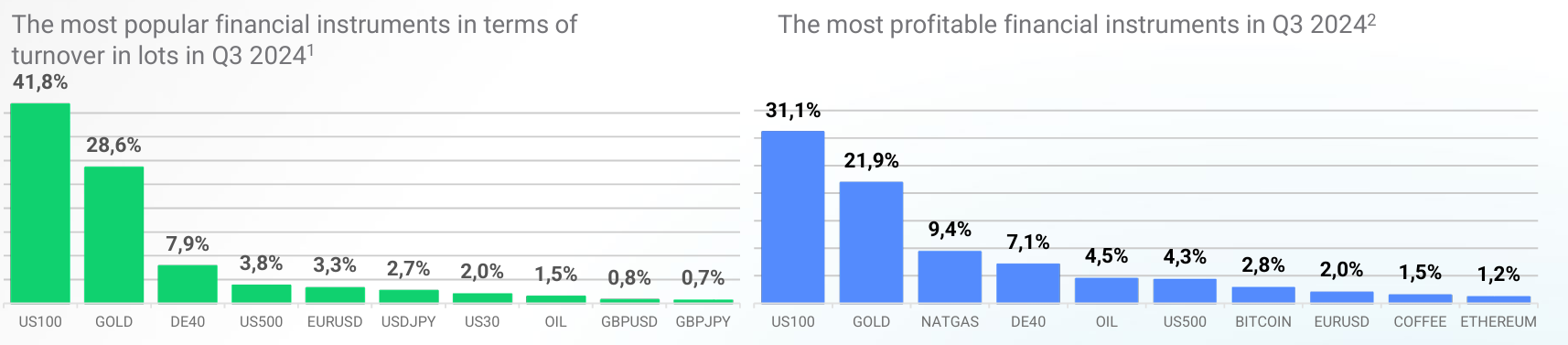
There are some More Profitable Instruments for brokers. For example, I don't know how people don't notice it, but brokers & scam affiliates actively encourage traders to trade Gold & NASDAQ CFDs.

But if you check the cost per 1 million USD value traded for these CFD instruments, it is really high. Look at the second attachment. Notice how much money as a percentage of their total income these brokers are making from forex, compared to other CFDs. Forex is almost meaningless.

Infact more than 50% forex/CFD brokerage income is from NAS100 & XAUUSD. So, next time you see a guru advising you to trade these instruments, think about their incentives in doing so.

H
@headies25284 - 5 days ago

1. Spreads (The Primary Revenue Source)

The spread is the markup between:

Bid (sell price)

Ask (buy price)

Example:

Real market price = 1.10000

Broker price = 1.09998 / 1.10002

Spread = 0.4 pips

If a broker receives raw spreads from a liquidity provider (LP) like:

JP Morgan

Citibank

UBS

Goldman Sachs

They may add their own markup.

Example:

LP spread = 0.1 pips

Broker charges = 1.0 pip

Profit = 0.9 pips per transaction

Since thousands of traders' place thousands of trades daily, even tiny spreads generate large revenue.

2. Commissions (Especially ECN/Raw Accounts)

On “Raw Spread” or “ECN” accounts, brokers cannot add much spread, so they charge a fixed commission.

Typical commission:

$6 – $10 per lot round-trip (open + close)

Why brokers charge commissions on raw accounts:

They must pay liquidity providers

They must maintain trading infrastructure

They earn transparent, fixed income from every trade

Professional traders and scalpers prefer this model because spreads are extremely low.

H
@headies25284 - 5 days ago
Quoted - headies25284

1. Spreads (The Primary Revenue Source)

The spread is the markup between:

Bid (sell price)

Ask (buy price)

Example:

Real market price = 1.10000

Broker price = 1.09998 / 1.10002

Spread = 0.4 pips

If a broker receives raw spreads from a liquidity provider (LP) like:

JP Morgan

Citibank

UBS

Goldman Sachs

They may add their own markup.

Example:

LP spread = 0.1 pips

Broker charges = 1.0 pip

Profit = 0.9 pips per transaction

Since thousands of traders' place thousands of trades daily, even tiny spreads generate large revenue.

2. Commissions (Especially ECN/Raw Accounts)

On “Raw Spread” or “ECN” accounts, brokers cannot add much spread, so they charge a fixed commission.

Typical commission:

$6 – $10 per lot round-trip (open + close)

Why brokers charge commissions on raw accounts:

They must pay liquidity providers

They must maintain trading infrastructure

They earn transparent, fixed income from every trade

Professional traders and scalpers prefer this model because spreads are extremely low.
3. Swap Fees (Rollover/Overnight Interest)

Every currency has an interest rate.

When you buy one currency and sell another, you pay or earn the difference.

Brokers make money when:

They increase the swap rate slightly

They charge swap on both sides depending on the trade

They receive swap from LPs and pass modified rates to retail clients

Swap depends on:

Central bank rates (Fed, ECB, BOE, BOJ)

Long vs short positions

Broker-specific markup

Some brokers offer swap-free (Islamic) accounts and instead charge:

A small fixed daily fee

A higher spread

Higher commissions

Which still produces revenue for the broker.