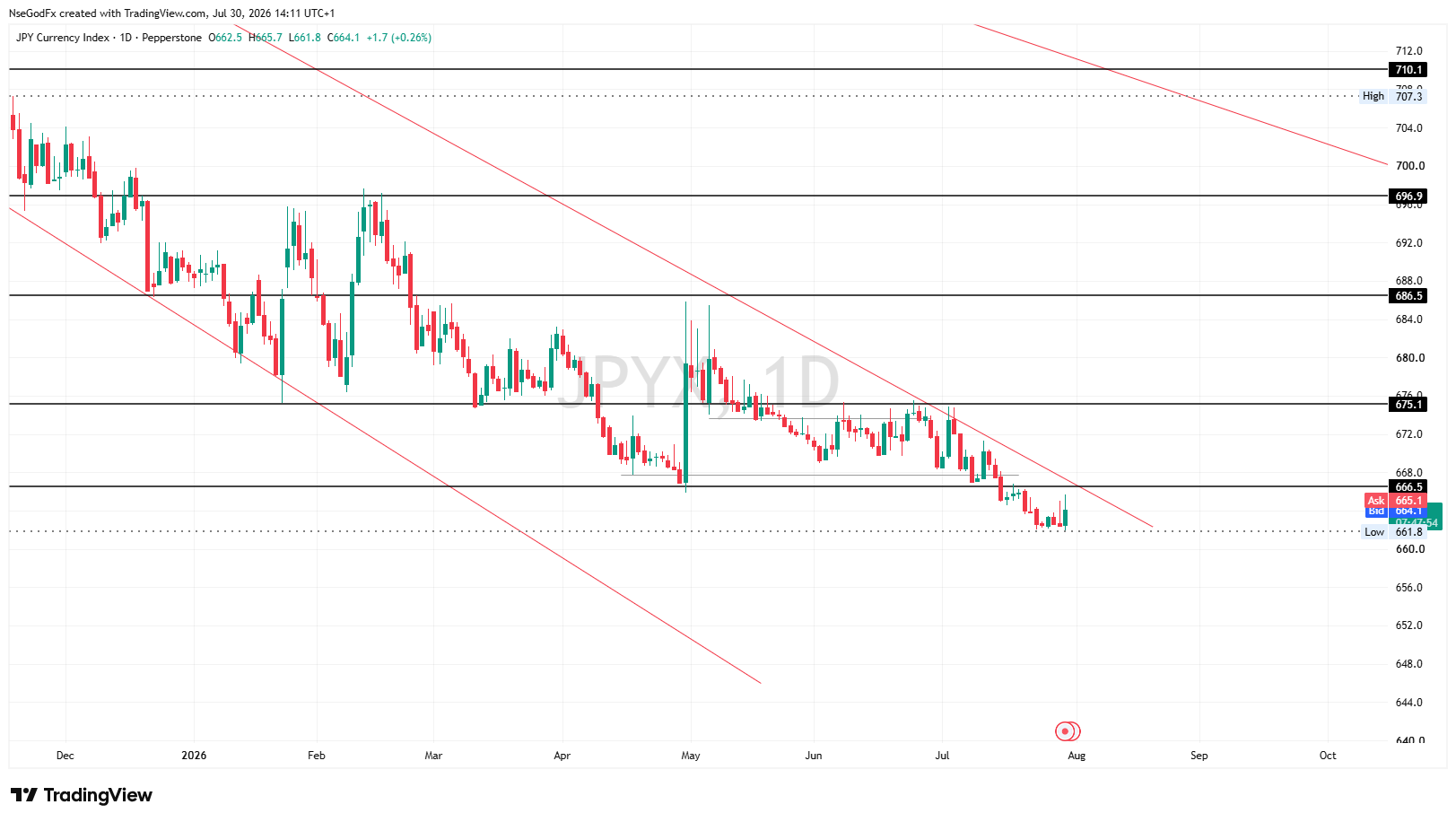
What Bond Yields Tell Us About The Forex Market

Hi please I would like us to discuss the relationship between bond yields and the forex market. Someone told me there is a relationship but I have been struggling to grasp it. Replies will be appreciated

N
@nsg_usd - 11 hours ago

Alright.

G
@godspowerdan - 11 hours ago

Government bonds are among the safest investments in the world, changes in their yields often influence the demand for a country's currency.

G
@godspowerdan - 11 hours ago

A U.S. Treasury bond yielding 5% is generally more attractive than one yielding 3%, assuming the risk is similar. So investors will often go for the higher yield and to get that, the investors will have to buy dollars to invest in the US bond thereby creating more demand for Dollar. That's how it affects a country's currency and in turns has a relationship with forex. Remember forex is foreign exchange

N
@nsg_usd - 11 hours ago
Quoted - nsg_usd

Alright.

Bond Yields vs Forex Market (1)

A bond yield is the return an investor earns (ROI) from holding a government bond. When you buy a government bond, you're lending money to the government. The money is added for use to bulid infrastructures and social amenities or other government needs.

In return, government pays you interest rate, e.g 10% per year and there's a maturity date which means your principal (your original investment) is returned to you after the set maturity date for e,g 5 years.
For example. You lend government $10,000, every year, the government pays you $1,000, after 5 years, they return your $10,000.

So, when we hear US 10-year Treasury yields, it means the bond has a maturity of 10years from the date it was issued to the investor.

A
@asuquokelvin - 11 hours ago

Bond yields and the forex market are closely linked because they influence where global investors put their money. In simple terms:

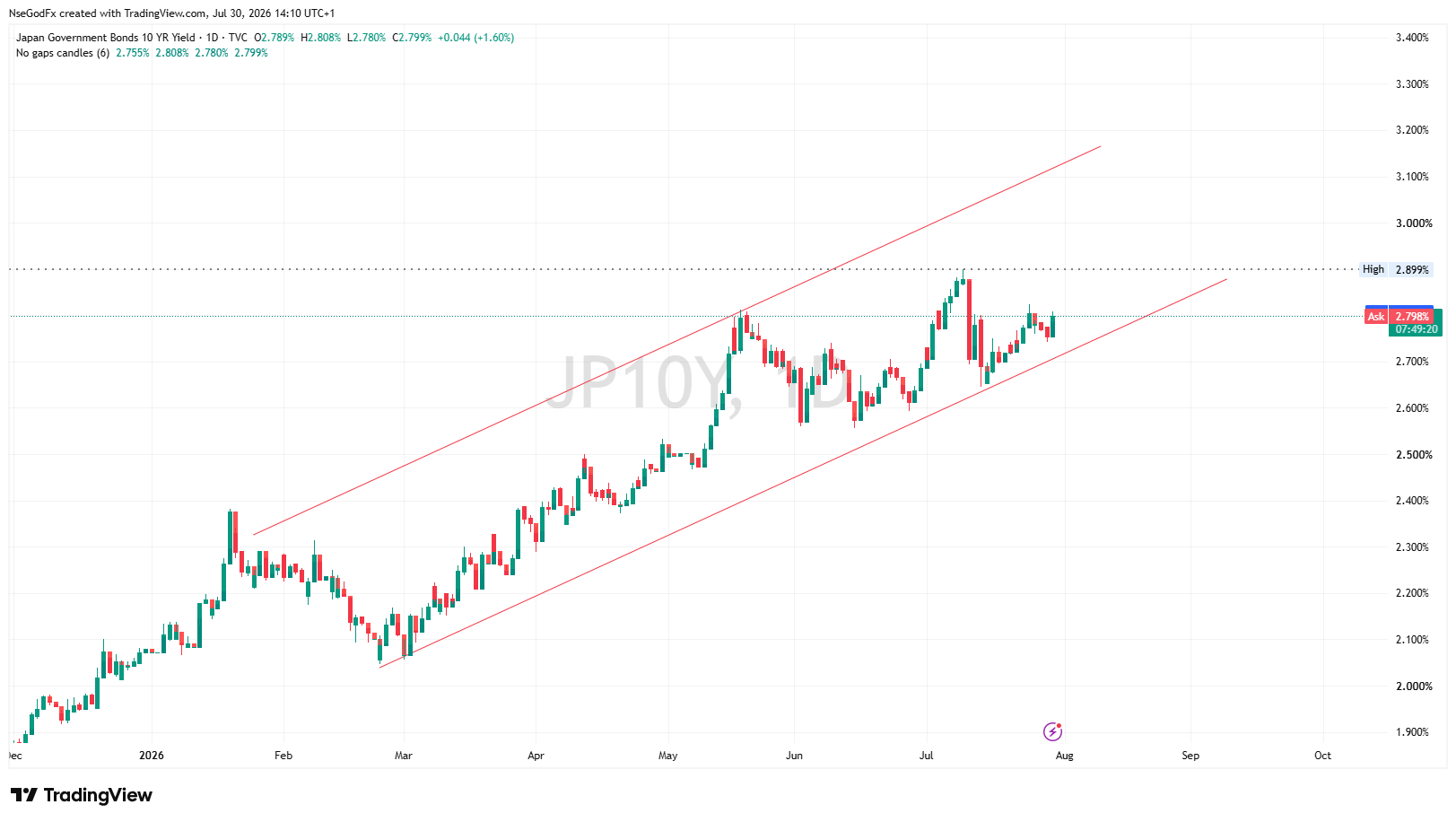
Higher bond yields usually attract foreign investment, increasing demand for that country's currency. Lower bond yields usually reduce demand for that currency.

Here's how it works:

1. Rising bond yields = Stronger currency

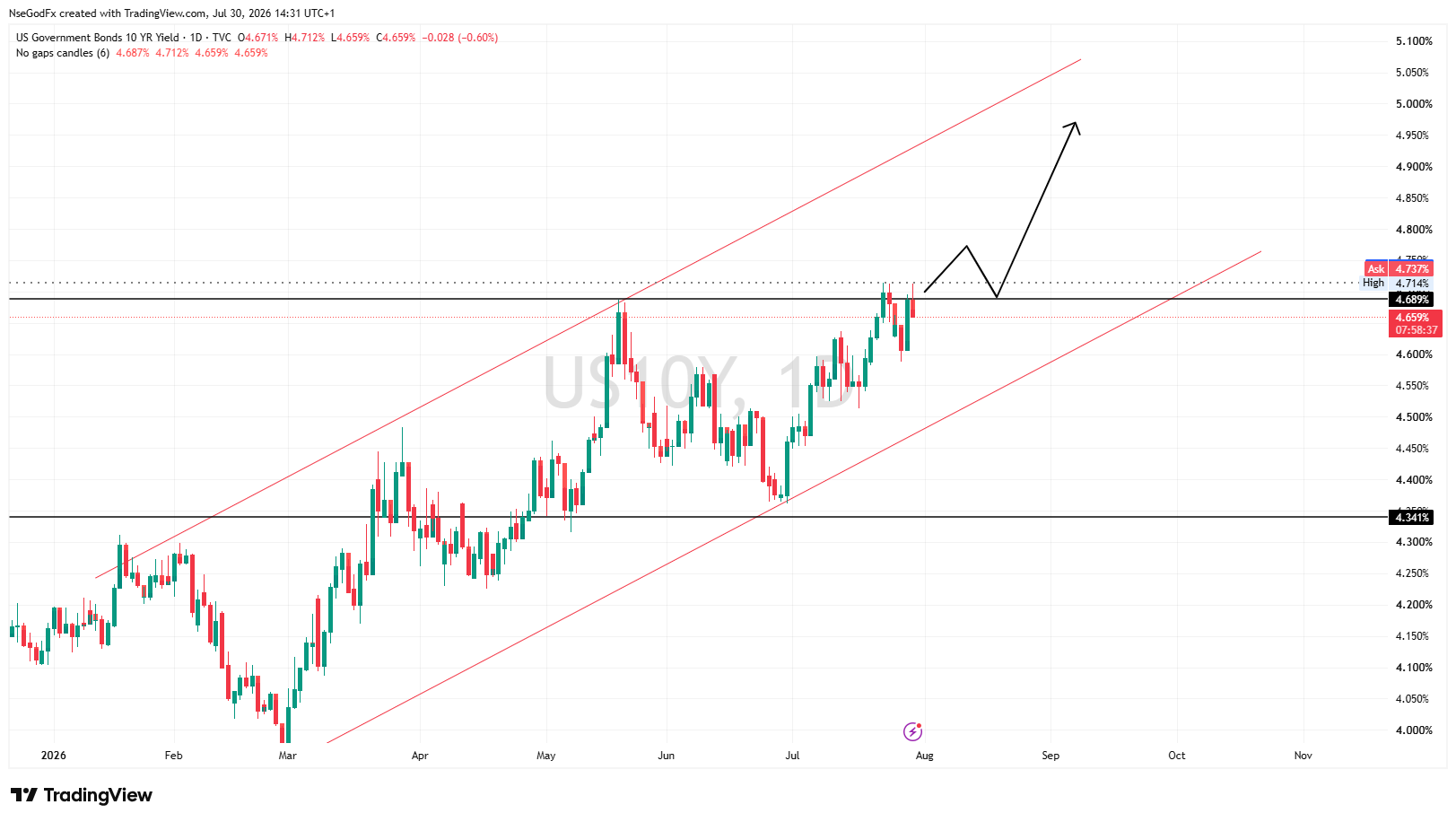
Suppose U.S. 10-year Treasury yields rise from 4.0% to 4.5%.

Investors can earn a better return by buying U.S. government bonds.

To buy those bonds, foreign investors must first buy USD.

Demand for USD increases.

USD strengthens against other currencies.

Example:

U.S. yields ↑

USD ↑

EUR/USD tends to fall.

GBP/USD tends to fall.

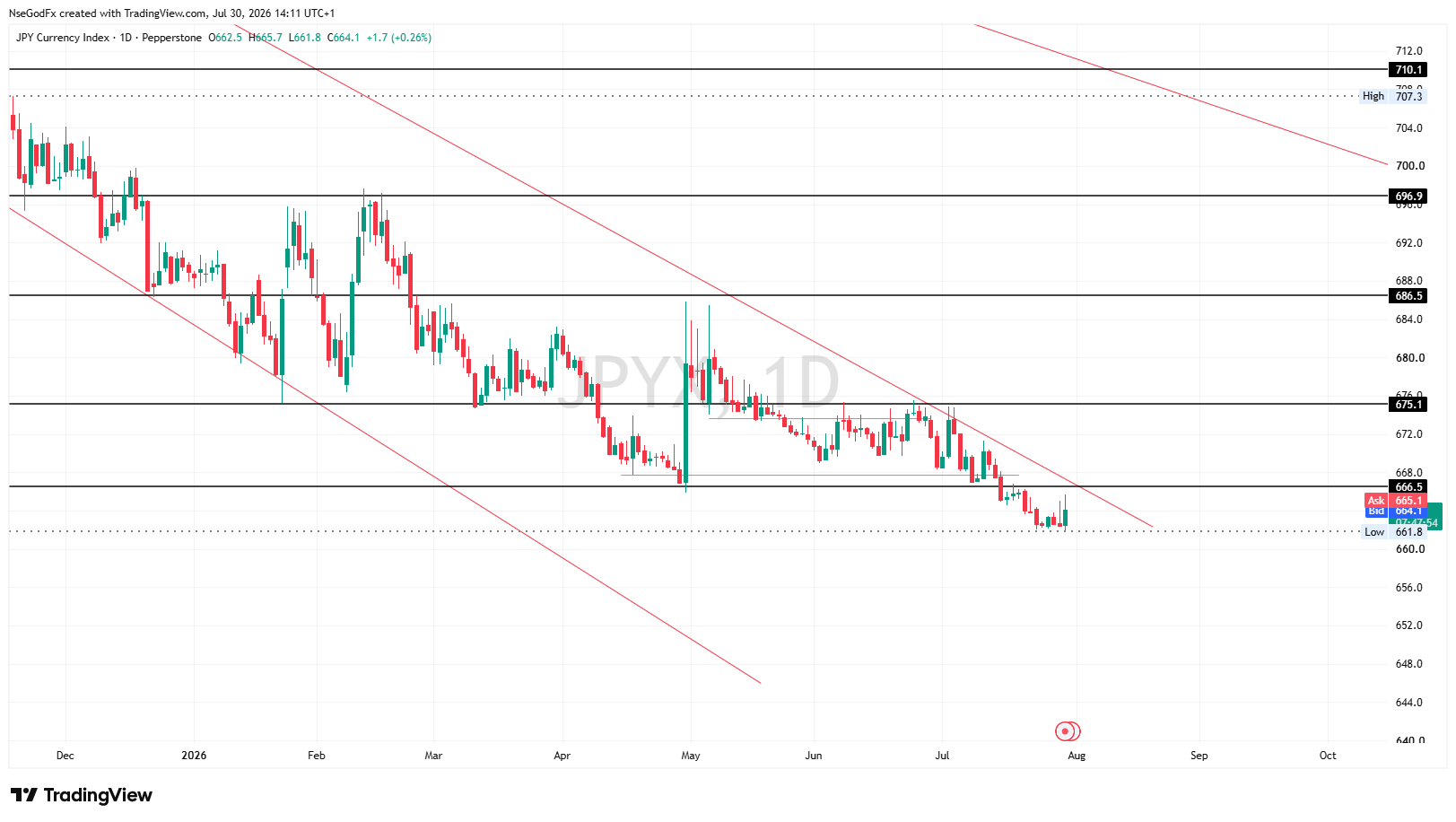
USD/JPY often rises.

2. Falling bond yields = Weaker currency

If U.S. bond yields fall:

Investors receive lower returns.

Some move money to countries with better yields.

They sell USD to buy other currencies.

USD weakens.

Why traders watch the 10-year yield

The 10-year government bond yield is one of the most important indicators because it reflects:

Interest rate expectations.

Inflation expectations.

Economic growth expectations.

If traders expect the Federal Reserve to keep interest rates high,

U.S. Treasury yields often rise, supporting the USD.

So In other words if USD must weaken then we must first of all see a weak treasury bond, which signifies that investors are actually pulling out their money from dollar investment into other risky assets.

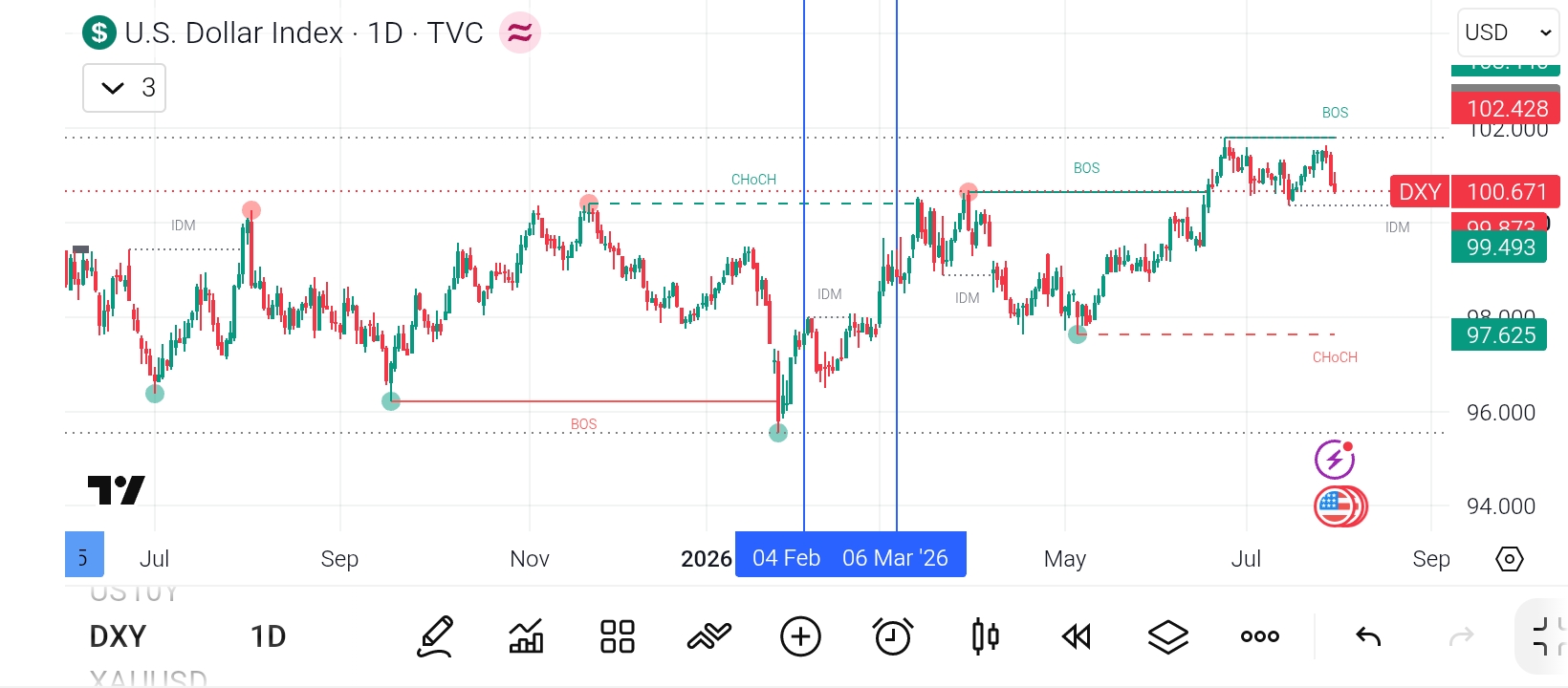
Check the chart image of the us10 year treasury bond on 4th Feb to march and dxy from 4th feb to march you will notice a similarity base on movement

X
@xellow - 10 hours ago
Quoted - asuquokelvin

Bond yields and the forex market are closely linked because they influence where global investors put their money. In simple terms:

Higher bond yields usually attract foreign investment, increasing demand for that country's currency. Lower bond yields usually reduce demand for that currency.

Here's how it works:

1. Rising bond yields = Stronger currency

Suppose U.S. 10-year Treasury yields rise from 4.0% to 4.5%.

Investors can earn a better return by buying U.S. government bonds.

To buy those bonds, foreign investors must first buy USD.

Demand for USD increases.

USD strengthens against other currencies.

Example:

U.S. yields ↑

USD ↑

EUR/USD tends to fall.

GBP/USD tends to fall.

USD/JPY often rises.

2. Falling bond yields = Weaker currency

If U.S. bond yields fall:

Investors receive lower returns.

Some move money to countries with better yields.

They sell USD to buy other currencies.

USD weakens.

Why traders watch the 10-year yield

The 10-year government bond yield is one of the most important indicators because it reflects:

Interest rate expectations.

Inflation expectations.

Economic growth expectations.

If traders expect the Federal Reserve to keep interest rates high,

U.S. Treasury yields often rise, supporting the USD.

So In other words if USD must weaken then we must first of all see a weak treasury bond, which signifies that investors are actually pulling out their money from dollar investment into other risky assets.

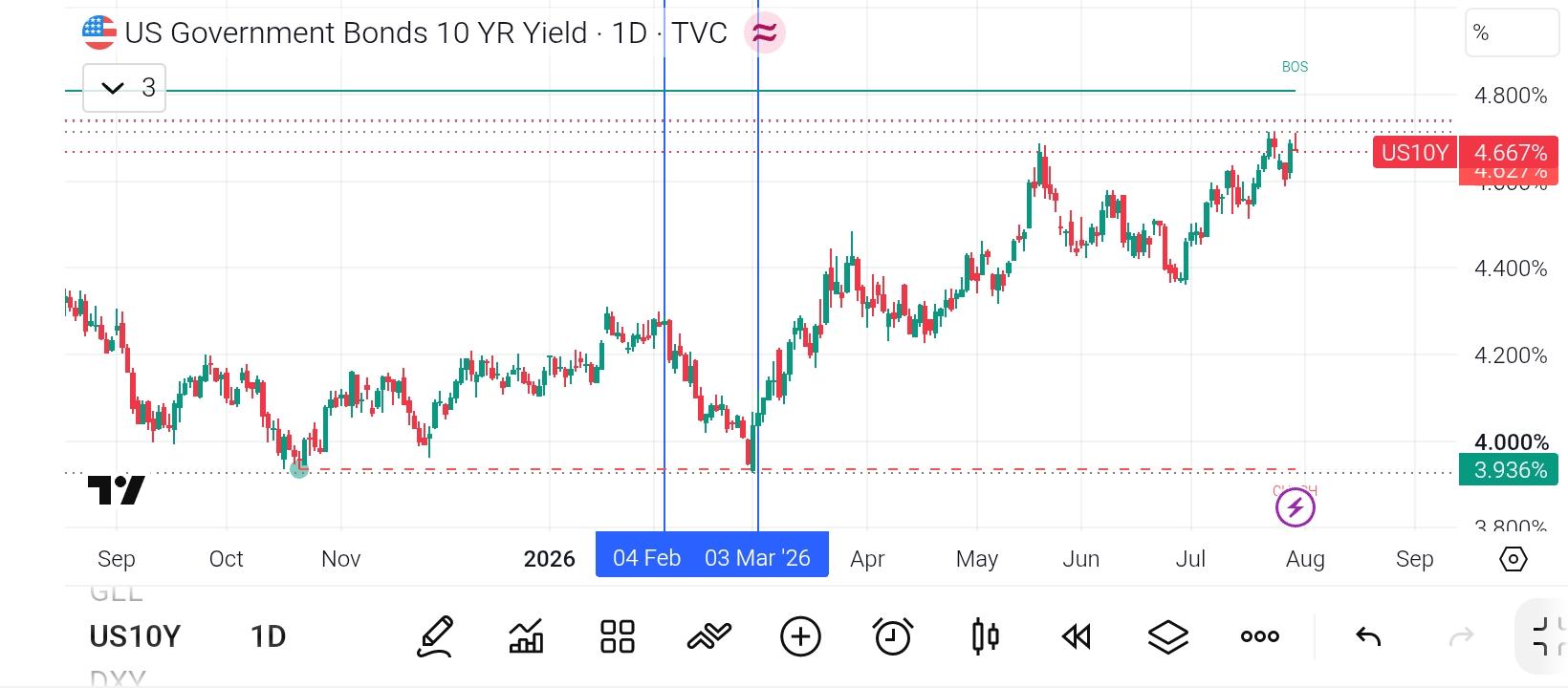
Check the chart image of the us10 year treasury bond on 4th Feb to march and dxy from 4th feb to march you will notice a similarity base on movement
Yes, but what causes bond yields to rise and fall?

X
@xellow - 10 hours ago

Every now and then we hear yields have risen/fallen so what causes these yields to rise and fall?

G
@godspowerdan - 10 hours ago
Quoted - xellow

what causes the bond yields to fluctuate?

Bond yields change mainly because of: Interest rate expectations (most important), Inflation expectations, Economic growth, and Demand for safe assets

For example:

Strong economy

Strong GDP, employment, and inflation may cause markets to expect the central bank to raise interest rates.

Higher expected rates → bond yields rise → currency strengthens.

N
@nsg_usd - 10 hours ago
Quoted - nsg_usd

Bond Yields vs Forex Market (1)

A bond yield is the return an investor earns (ROI) from holding a government bond. When you buy a government bond, you're lending money to the government. The money is added for use to bulid infrastructures and social amenities or other government needs.

In return, government pays you interest rate, e.g 10% per year and there's a maturity date which means your principal (your original investment) is returned to you after the set maturity date for e,g 5 years.
For example. You lend government $10,000, every year, the government pays you $1,000, after 5 years, they return your $10,000.

So, when we hear US 10-year Treasury yields, it means the bond has a maturity of 10years from the date it was issued to the investor.

Bond Yields vs Forex Market (2)

The main way Bond yields (especially government bond yields) relates with the forex market, is through interest rates.
A higher bond yields reflects higher interest rates, and that attract foreign capital inflows. this Inturn strengthens that country's currency in the forex market.
For example, when yields rise-
-Investors seek higher returns by buying that country's bonds.
-To purchase those bonds,Foreign investors must first buy the local currency.
-This will increase the demand for the local currency, pusher it's value higher (the currency appreciates.)

N
@nsg_usd - 10 hours ago
Quoted - xellow

what causes the yields to change

The bond yields rise and fall primarily in response to Interest rate hikes, and Interest rate cuts.
When the government increases/hikes their interest rates, bond yields rises.
When they cut their rates, the bond yields fall.

N
@nsg_usd - 10 hours ago
Quoted - nsg_usd

The bond yields rise and fall primarily in response to Interest rate hikes, and Interest rate cuts.
When the government increases/hikes their interest rates, bond yields rises.
When they cut their rates, the bond yields fall.

Bond yields vs Forex Market (3)

Reasons Bond yields Fluctuate (Rise and Fall often)

1) Yields rise and Fall because investors are constantly buying and selling bonds.

Bond Prices Vs Bond Yields

Its good to know the differences between bond prices and bond yields.
They are inversely correlated to each other that means, they always move in opposite directions.

When investors buy Bonds, It causes bond prices to rise, and the bond yields to fall.
When investors sell Bonds, It reduces the demand and causes bond prices to fall, while the bond yields to rise.

How this affects the Forex market!

Suppose US FOMC interest rate data is released, and investors think the Fed will keep interest rates higher for a longer period of time, Investors will sell existing US bonds with lower returns.

Result: Bond prices fall, Bond yields rise.

Lower Bond prices makes it cheap, and more investors join.
Higher US yields attract more foreign investors seeking better returns. They Buy USD to invest in US assets. The US dollars strengthens.

The opposite is the case, when the FOMC interest rate data is released, and investors think the Fed will cut interest rates, or keep it lower for a longer period of time, Investors will sell bonds and US assets, expecting higher returns.

Result: Bond prices rise, Bond yields Fall.

The cycle repeats.

N
@nsg_usd - 9 hours ago
Quoted - nsg_usd

Bond yields vs Forex Market (3)

Reasons Bond yields Fluctuate (Rise and Fall often)

1) Yields rise and Fall because investors are constantly buying and selling bonds.

Bond Prices Vs Bond Yields

Its good to know the differences between bond prices and bond yields.
They are inversely correlated to each other that means, they always move in opposite directions.

When investors buy Bonds, It causes bond prices to rise, and the bond yields to fall.
When investors sell Bonds, It reduces the demand and causes bond prices to fall, while the bond yields to rise.

How this affects the Forex market!

Suppose US FOMC interest rate data is released, and investors think the Fed will keep interest rates higher for a longer period of time, Investors will sell existing US bonds with lower returns.

Result: Bond prices fall, Bond yields rise.

Lower Bond prices makes it cheap, and more investors join.
Higher US yields attract more foreign investors seeking better returns. They Buy USD to invest in US assets. The US dollars strengthens.

The opposite is the case, when the FOMC interest rate data is released, and investors think the Fed will cut interest rates, or keep it lower for a longer period of time, Investors will sell bonds and US assets, expecting higher returns.

Result: Bond prices rise, Bond yields Fall.

The cycle repeats.

Bond Yields vs Forex Market (4)

Why Investors Buy or Sell bonds (a)

Investors buy bonds :
when they are scared,
when economic growth slows,
when Inflation falls,
and When Central banks will possibly cut rates.

This is usually to protect their investments, and mitigate losses. so money flows into bonds, when the Feds sets a Hawkish tone, and during geopolitical crises.
The more money that flows into bonds and bond prices rise, the more Bond Yields will fall.
To buy the bonds, investors needs to buy the local country currency first (USD), creating more demand for the currency, thus causing it to appreciate.

N
@nsg_usd - 9 hours ago
Quoted - nsg_usd

Bond Yields vs Forex Market (4)

Why Investors Buy or Sell bonds (a)

Investors buy bonds :
when they are scared,
when economic growth slows,
when Inflation falls,
and When Central banks will possibly cut rates.

This is usually to protect their investments, and mitigate losses. so money flows into bonds, when the Feds sets a Hawkish tone, and during geopolitical crises.
The more money that flows into bonds and bond prices rise, the more Bond Yields will fall.
To buy the bonds, investors needs to buy the local country currency first (USD), creating more demand for the currency, thus causing it to appreciate.

Bond Yields vs Forex Market (4)

Why investors Buy or Sell Bonds (b)

Investors sell bonds when:
-Economic growth improves
-The Feds sets a dovish tone
-Inflation rises
-Central banks may hike rates
-Investors move their funds into stocks/ and risk assets

When they sell bonds, It causes Bond prices to fall, and bond yields to rise.

Investors sell bonds to spread their investments, take more risks and seek higher returns.
To do that, they convert the current currency (USD) into another currency (JPY). This weakens USD and causes it to depreciate.

A
@asuquokelvin - 9 hours ago
Quoted - xellow

what causes the yields to change

The yields change base on the fact that the bonds increase, once treasury bond increases yield tend to fall because everyone is sourcing for the bond and it will be sold for higher than previous price but with same return, let's say for example the us government call out to investors borrow us money which is the bond and we will give you 5% interest every year which is the yield, so now if the bond was for 100$ and yearly return is 5% then if fed announce new rate decrease to 3% then we will have bond A and bond B people will want to still go for bond A which gives 5% yield but may not be at 100$ again but will go for 120$ which instead of giving yield of 5$ interest will give yield of 4$ interest and if bond keeps rising while yield fall it weakens the dollar more because investors become less interested, but if bonds are cheap let's say from the 3% rate the fed now announce a 6% increase in interest rate now those that bought treasure bonds earlier for 5% yield will sell their treasure bond now the much sells will signify that investor are withdrawing from low yield from the previous bond to higher yield, so bond price will fall , because of the massive sells then the yield of 6% still remain for the new bond let's say 80$ to 6% yield in one year,so it all revolve around interest rate, hope it answers your question

Y
@yokoyi - 8 hours ago

There are two kinds of bond yields:

1.Actual Yield

This is the amount of interest a bond holder (who bought the bond in the primary market when it was originally being issued) will be paid after the lifespan of the bond expires (assuming he doesn't sell the bond prematurely)

2.Yield To Maturity (YTM)

This is the amount of interest a bond holder (who bought the bond in the secondary market meaning he bought the bond as second hand from someone else) will get when the lifespan of the bond is reached.

The YTM is the one forex traders should be more concerned with. Whenever a bondholder is afraid that the bond issuer (which is the government) is going to increase interest rates, the bondholder could decide to sell the bond so he can use the money to buy new bonds at a higher interest rate.

if he wants to sell the bonds to you, the yield you will be getting is YTM not actual yield because the original bondholder would have already enjoyed some parts of the yield payment.

if he sells the bond to you at the original price he bought it at, he will be cheating you because he has already enjoyed part of the yield payment so you will get a bad deal.

To solve this problem and allow equity to reign, the original bond holder must reduce the selling price and sell to you at a lower price so you get a higher YTM.

So as a trader when you hear that bond yields have gone up, most times they are referring to YTM and it means there is fear of interest rate hikes so bond holders are getting rid of old bonds and hoping to buy new bonds when the interest rate is hiked.

And remember that interest rates are the number one influencer of exchange rate of currencies, a higher interest rate will make a currency appreciate (this works for healthy economies only).

So if the news says US bond yields are at a 30 year high, it could mean investors expect the Federal Reserve Bank to hike interest rates so the US Dollar could be expected to appreciate and EUR/USD price will fall

But if the news says US bond yields are falling, it could mean an interest rate cut is expected so investors/bondholders will not want to sell their bonds for cheap and investors could decide to sell the dollar and move to equities and fixed income meaning the price of a major pair like EUR/USD will rise.

Disclaimer:

At MyTradingLand.com, we connect you with forex brokers and provide a community for traders. While we offer valuable information and resources, please note that we are not financial advisors and cannot provide personalized financial advice. Always conduct your own research and invest responsibly.

Community Guidelines: The MyTradingLand.com community is designed as a resource for forex traders, promoting respectful and constructive discussions. We reserve the right to remove any content that is misleading, abusive, or violates our terms of service.

Broker Information: While we may receive commissions or advertising income from some of the brokers listed, this does not imply an endorsement of any broker, nor does it affect our review process. Our evaluations are based solely on objective criteria and user feedback.

Always verify the regulatory status of any broker with your local financial authority, along with their terms and privacy policies, before engaging with them. It is crucial to conduct thorough research to ensure that you are making informed decisions.

Risk Warning: At MyTradingLand.com, we strive to provide accurate information; however, the forex market is highly volatile and can change rapidly. It is essential to verify any information before making investment decisions.

Please be aware that trading in forex involves substantial risk, and it is possible to lose more than your trading equity/investment capital. 70-90% of retail CFD traders incur losses in their trading activities as per information from various brokers.

You are solely responsible for your use of MyTradingLand.com and any trading decisions you make. We encourage all users to educate themselves thoroughly about forex trading and to consider seeking advice from qualified financial professionals.

Advertising Disclosure: We may earn commissions from recommended brokers, but our reviews are independent (not influenced by potential earnings). Sponsored content is clearly marked and doesn't reflect our views.

©2026 ©2025 All rights reserved Mytradingland.com