which eurchf news can affect its price?

Been trading eurchf lately and i am looking for an edge; so may i ask what important news events (apart from the usual ones) can affect eurchf price?

P
@paul_petit - 1 year ago

News of Trade Wars between the United States & China have caused Swiss Franc to appreciate against other currencies in the past.

When US & China were in a trade war, investors ran to the Swiss Franc for safety, and this caused the Swiss Franc to strengthen against the Euro; so, the EUR/CHF exchange rate fell to record lows.

H
@headies25284 - 5 months ago

EUR/CHF behaves differently from most pairs because CHF is a safe-haven currency and the SNB (Swiss National Bank) actively intervenes when needed.

1. Swiss National Bank (SNB) Currency Intervention Signals

This is the biggest hidden driver of EUR/CHF.

The SNB doesn’t always announce interventions directly. But clues come from:

Official SNB statements

SNB balance sheet changes

Weekly sight deposits at SNB

Speeches by SNB officials (Jordan, Schlegel, etc.)

Why it matters:

When the SNB buys EUR to weaken CHF → EUR/CHF moves up

When the SNB exits intervention → EUR/CHF drops

✅ 2. Eurozone Banking Stability News

The CHF strengthens whenever there is stress in European banks.

Watch for:

Bank earnings failures

Liquidity concerns

Italian bank debt news

ECB bank lending surveys

Why it matters:

Banking fear = traders run to safe-haven CHF → EUR/CHF falls

H
@headies25284 - 5 months ago

✅ 3. Unexpected Safe-Haven Flows

CHF reacts strongly to global fear, even when Switzerland isn’t involved.

Events that cause CHF to strengthen:

Geopolitical tensions (Israel–Iran, Russia–Ukraine, Taiwan risk)

Big stock market crashes (e.g., S&P 500 down sharply)

Sudden risk-off sentiment

If equities fall hard → CHF strengthens → EUR/CHF drops.

This pair is practically a fear barometer.

4. Switzerland Trade Balance

Not widely followed by most traders, but it moves EUR/CHF.

Switzerland often runs a large trade surplus.

A much stronger surplus usually strengthens CHF.

Why?

More exports = more demand for CHF → EUR/CHF dips.

S
@skyfall - 5 months ago

Pls how did Israel - Iran conflict affect the CHF?

S
@skyfall - 5 months ago

"When the SNB exits intervention → EUR/CHF drops" : Any evidence of this happening in the past?

H
@headies25284 - 5 months ago
Quoted - skyfall

Pls how did Israel - Iran conflict affect the CHF?

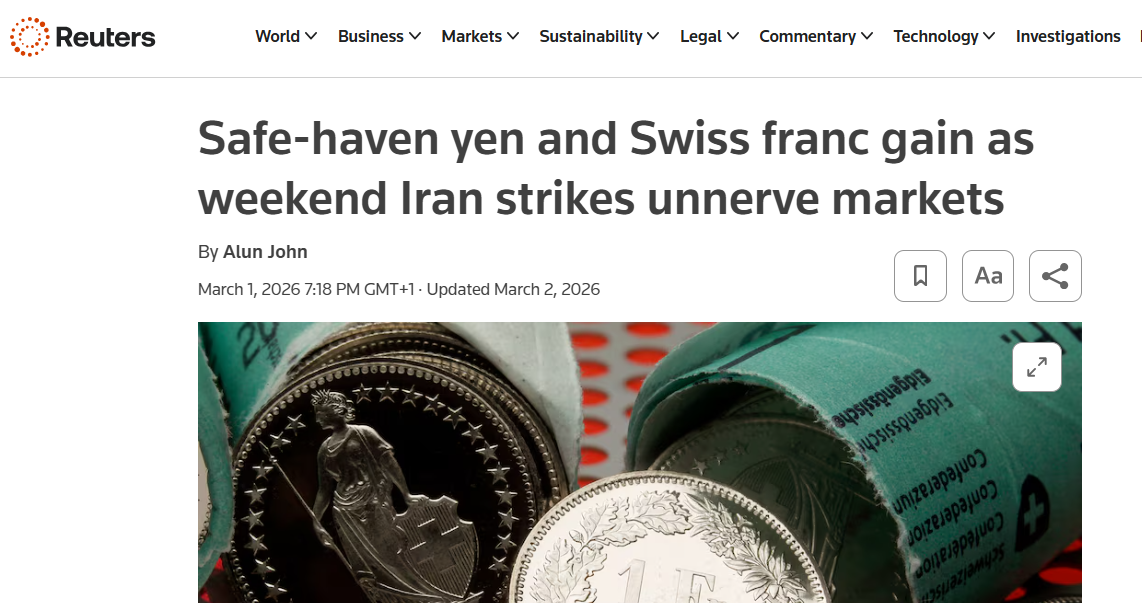
When the Israel-Iran conflict escalated, investors moved money into “safe-haven” currencies because of uncertainty in global markets.

The Swiss franc is considered a classic safe-haven currency, like the Japanese yen. That means when geopolitical risk rises, demand for CHF often increases — and its value rises relative to other currencies like the US dollar.

This means:

CHF tended to appreciate (gain value) against risk-linked currencies.

The USD/CHF exchange rate moved lower (which means 1 USD bought fewer CHF) at times during the conflict.

Y
@yokoyi - 5 months ago
Quoted - skyfall

"When the SNB exits intervention → EUR/CHF drops" : Any evidence of this happening in the past?

Switzerland has an inflation rate of 0.1% and when you take a loan from a Swiss bank there is 0% interest. Currently, the Swiss Franc is at an 11 year high against other currencies and normally the SNB (Swiss National Bank) would interven to lower so as to protect their local exporters, but this time they have chosen not to do so.

A strong CHF currency means EUR/CHF exchange rate will go down and it wil cost less CHF to buy 1 EUR. It is happening right now, please read the news story via the link below

https://www.cnbc.com/2026/01/28/swiss-franc-us-dollar-price-fx-exchange-rate-trump-switzerland-snb-currency.html

Y
@yokoyi - 4 months ago

US/Iran conflict has caused the swiss franch to jump to record highs against other currencies

H
@headies25284 - 4 months ago
Quoted - yokoyi

US/Iran conflict has caused the swiss franch to jump to record highs against other currencies

The Swiss franc is widely known as one of the world’s strongest safe-haven currencies. Whenever global tension or geopolitical conflict increases, investors tend to flee risky assets and move their money into “safer” places — and Switzerland is one of the safest.

During crises, traders and large institutions look for:

Stability

Low political risk

Strong financial systems

Reliable banking structure

Switzerland checks all these boxes, so CHF becomes a go to currency when fear rises in the markets.

The US–Iran conflict increases global uncertainty, so investors sell riskier currencies (AUD, GBP, NZD, EUR, emerging markets) and buy CHF, pushing its value higher.

J
@jay_malema - 4 months ago

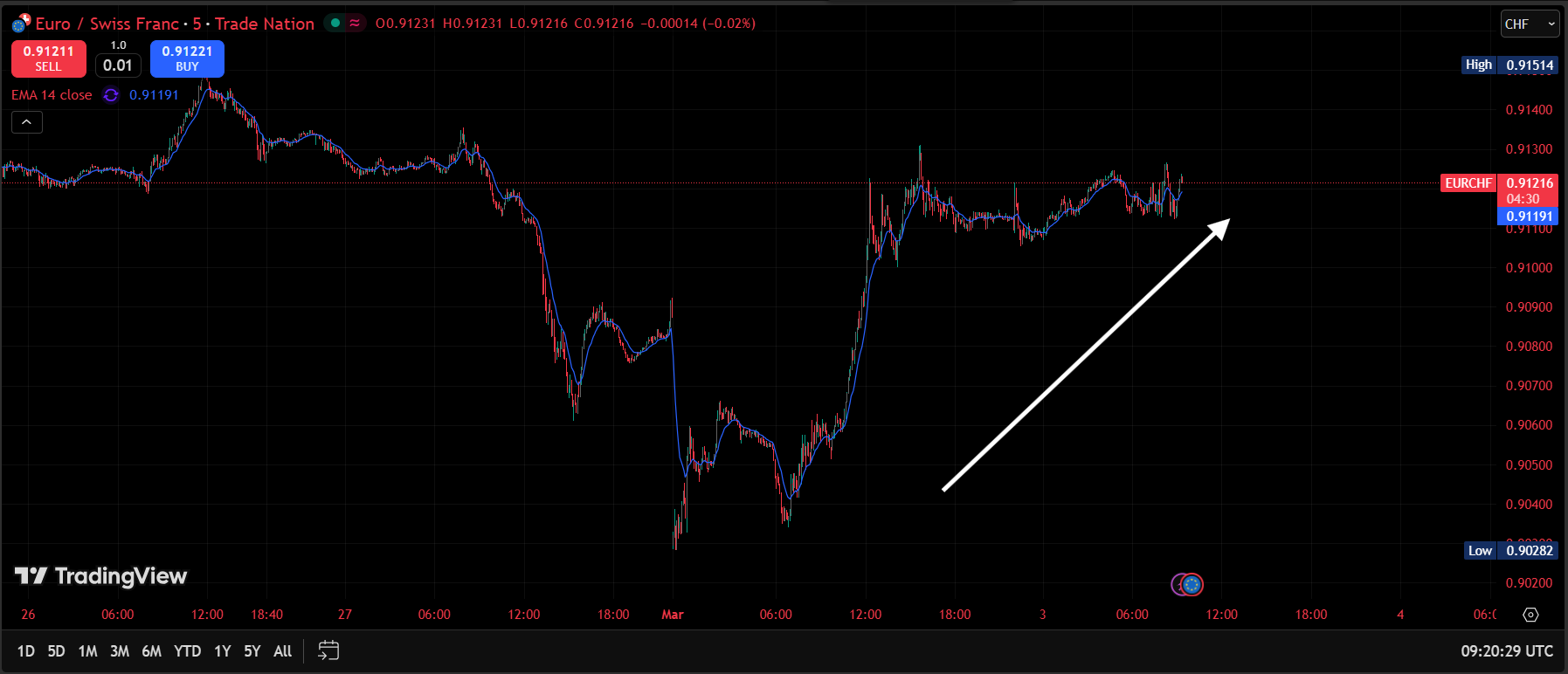
@headies but why is eurchf exchange rate increasing? Does this not mean the CHF currency is losing strength? If people are running to CHF as a safe haven then eurchf price should be falling dont you think?

Y
@yokoyi - 4 months ago
Quoted - jay_malema

@headies but why is eurchf exchange rate increasing? Does this not mean the CHF currency is losing strength? If people are running to CHF as a safe haven then eurchf price should be falling dont you think?

The Swiss National Bank may have begun its intervention efforts to weaken the CHF. The swiss economy generates money from exporting stuff like gold, watches etc. so they like to maintain a competitive exchange rate that will make their exports more attractive/affordable. This could be a possible explanation for the increase in the eurchf exchange rate. Also remember that the European Union is Switzerlands biggest trade partner.

Disclaimer:

At MyTradingLand.com, we connect you with forex brokers and provide a community for traders. While we offer valuable information and resources, please note that we are not financial advisors and cannot provide personalized financial advice. Always conduct your own research and invest responsibly.

Community Guidelines: The MyTradingLand.com community is designed as a resource for forex traders, promoting respectful and constructive discussions. We reserve the right to remove any content that is misleading, abusive, or violates our terms of service.

Broker Information: While we may receive commissions or advertising income from some of the brokers listed, this does not imply an endorsement of any broker, nor does it affect our review process. Our evaluations are based solely on objective criteria and user feedback.

Always verify the regulatory status of any broker with your local financial authority, along with their terms and privacy policies, before engaging with them. It is crucial to conduct thorough research to ensure that you are making informed decisions.

Risk Warning: At MyTradingLand.com, we strive to provide accurate information; however, the forex market is highly volatile and can change rapidly. It is essential to verify any information before making investment decisions.

Please be aware that trading in forex involves substantial risk, and it is possible to lose more than your trading equity/investment capital. 70-90% of retail CFD traders incur losses in their trading activities as per information from various brokers.

You are solely responsible for your use of MyTradingLand.com and any trading decisions you make. We encourage all users to educate themselves thoroughly about forex trading and to consider seeking advice from qualified financial professionals.

Advertising Disclosure: We may earn commissions from recommended brokers, but our reviews are independent (not influenced by potential earnings). Sponsored content is clearly marked and doesn't reflect our views.

©2026 ©2025 All rights reserved Mytradingland.com