how does dxy affect the prices of currency pairs

Hi everyone, please I would like to know how the us dollar index (dxy) affects other currency pairs and how i can use this knowledge to trade better.

M
@mr_casey - 10 months ago

The DXY (also known as US Dollar Index) is a measure of how strong the US DOllar is when compared to major world currencies such as GBP, EUR, CAD, JPY etc.

How to read DXY is that when the value is above 100 it is good for the dollar and when it is below 100 it is bad for the dollar.

Let me explan: if dxy reading is 110 then the US Dollar is stronger than major world currencies by 10%.

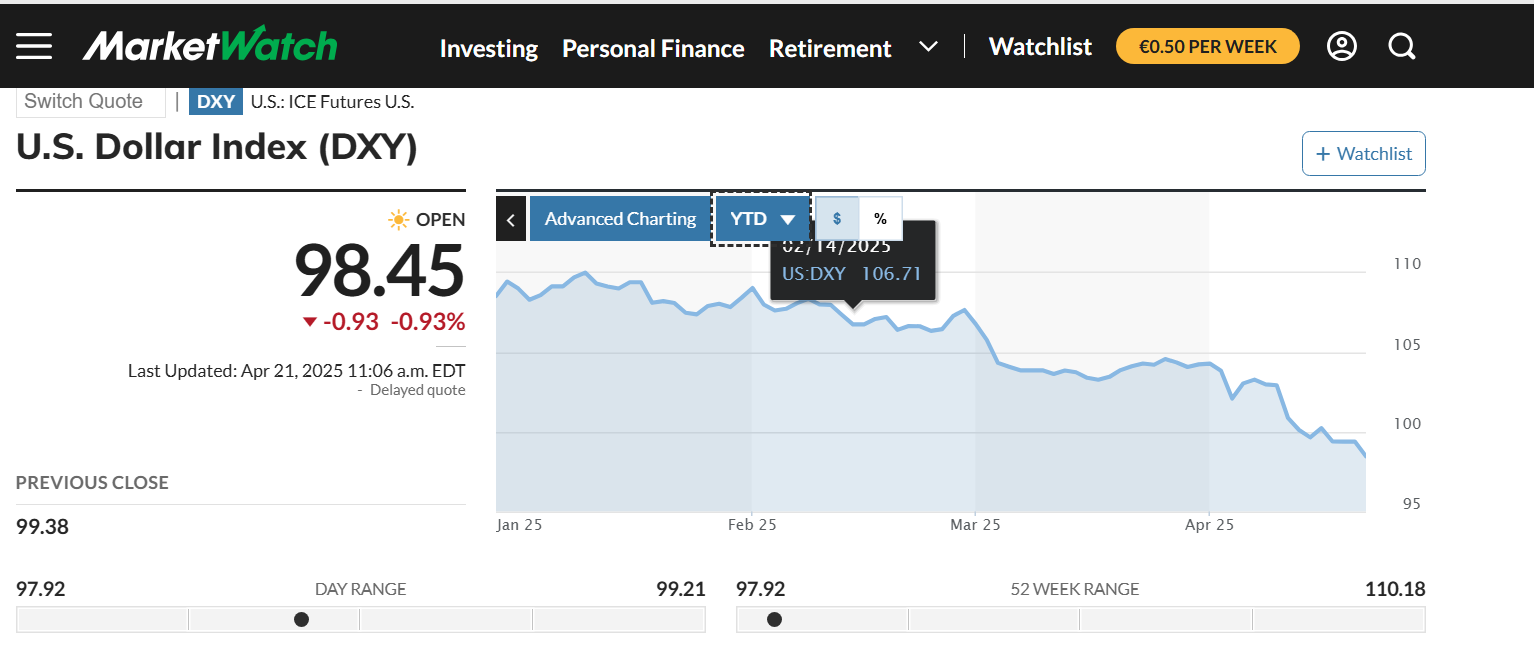
Today the dxy reading is 98.45 (less than 100) so it means the US Dollar is weaker than other major currency pairs by 1.55%.

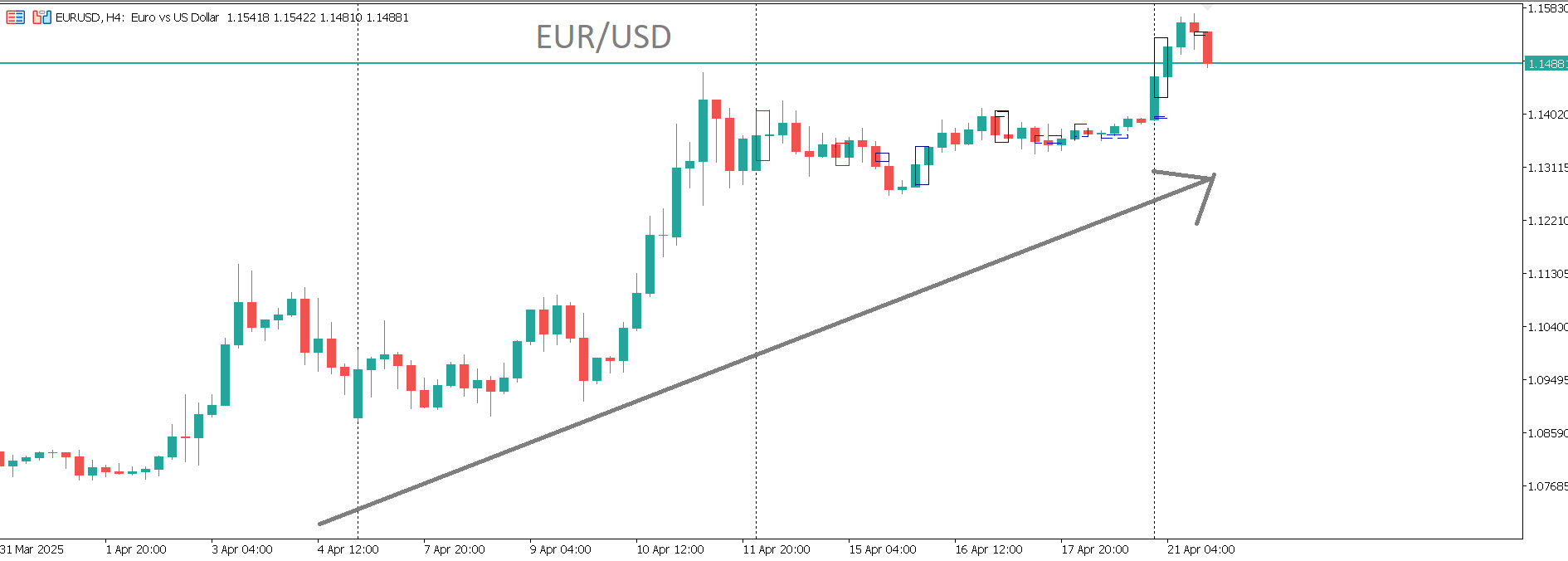
With a weak dxy reading as we have today at 98.45 take a look at the eurusd chart i attached, the eurusd exchange rate is increasing signifying that it is costing more USD to buy one EUR which is bad for the dollar.

P
@patrader - 10 months ago

I don't think watching dxy gives any special advantage and edge.

But historically rising dollar means flight to safe haven and bad time for the rest of the world.

Recently the tariff debacle has caused the entire world to get spooked and foreigners are pulling out of US capital markets. So dollar is falling which is opposite to what it used to be since dollar is a safe haven.

There is a lot happening causing markets to act crazy. So best be cautious with using leverage.

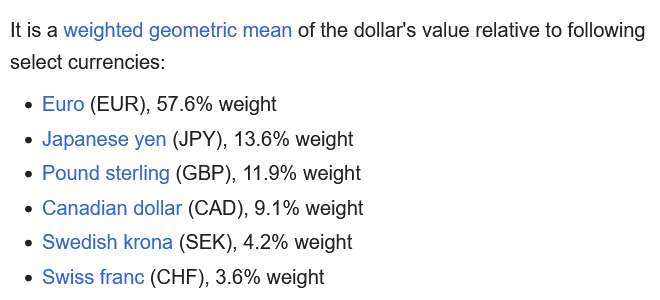
The image source is wikipedia:


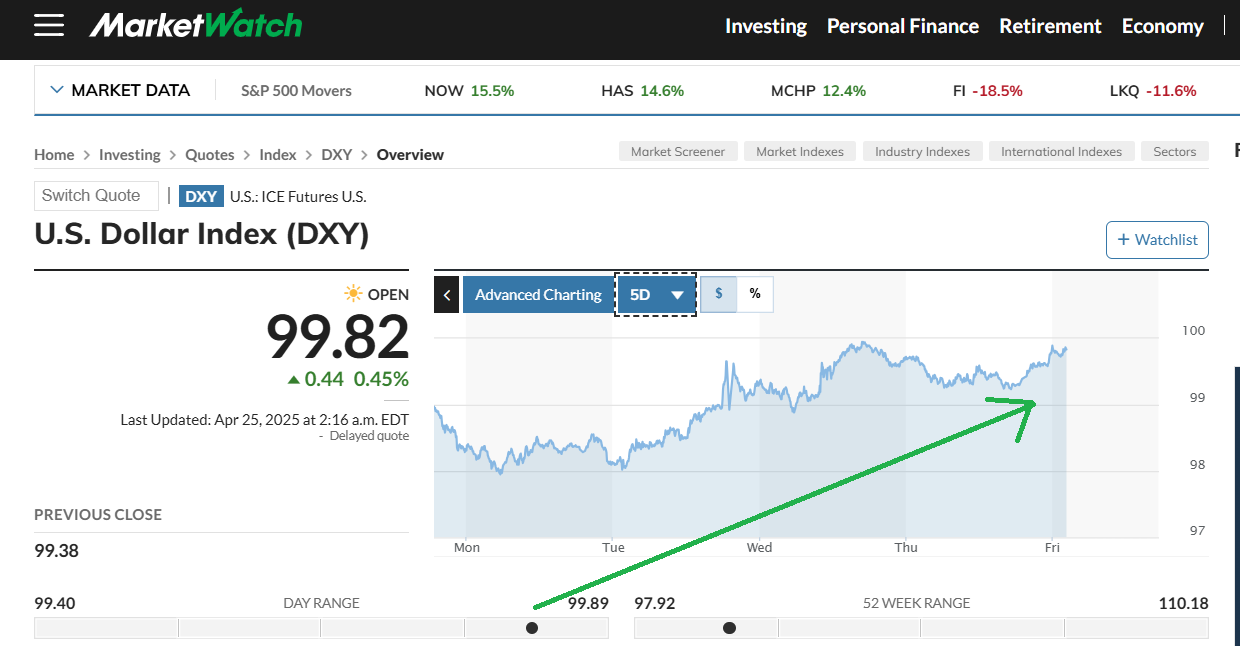
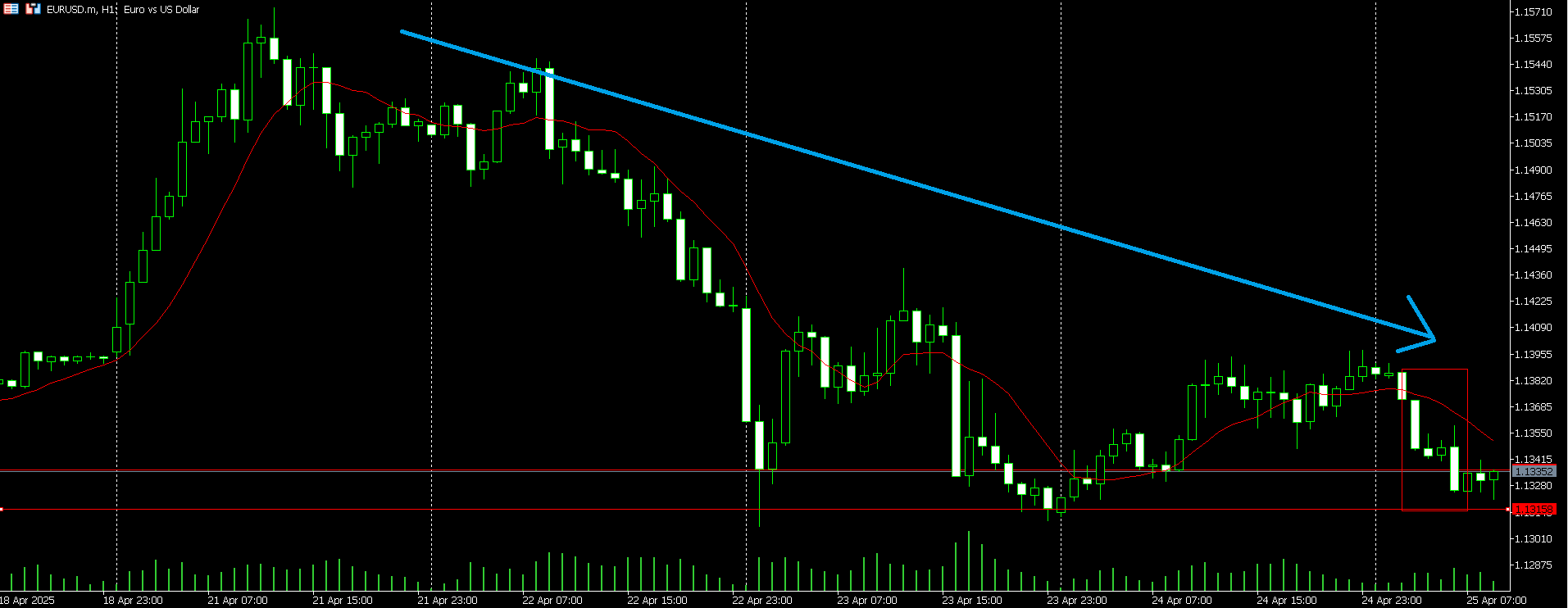
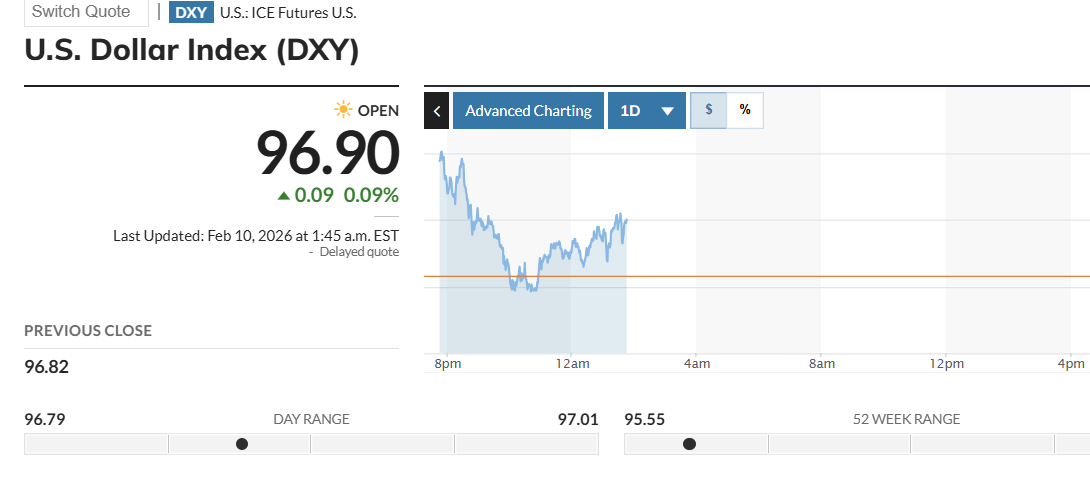
The us dollar index just gives you an idea of arket sentiment. Today at 96.90 it means the us dollar is 3.1% weaker than major world currencies.

H
@headies25284 - 2 weeks ago

The DXY (U.S. Dollar Index) measures the value of the U.S. dollar against a basket of major currencies (EUR, JPY, GBP, CAD, SEK, CHF).

Because it represents overall USD strength, it often influences (and is influenced by) individual currency pairs.

When DXY goes UP

The U.S. dollar is strengthening overall.

Effects:

USD pairs usually rise (like USD/JPY, USD/CAD) because the dollar is getting stronger.

Non-USD currencies fall relative to USD (like EUR/USD, GBP/USD) because it takes fewer dollars to buy them.

Example:

If DXY rises, EUR/USD often falls.

H
@headies25284 - 2 weeks ago

When DXY goes DOWN

The U.S. dollar is weakening.

Effects:

USD pairs often fall (like USD/JPY, USD/CAD) because the dollar is weakening.

Non-USD currencies rise vs USD (like EUR/USD, GBP/USD).

Example:

If DXY drops, GBP/USD usually rises.

DXY reflects:

Interest rate expectations for the U.S.

Market risk sentiment (USD rises when people want safety)

Global demand for dollars

Because the U.S. dollar is the world’s dominant currency, shifts in DXY ripple through nearly all FX markets.